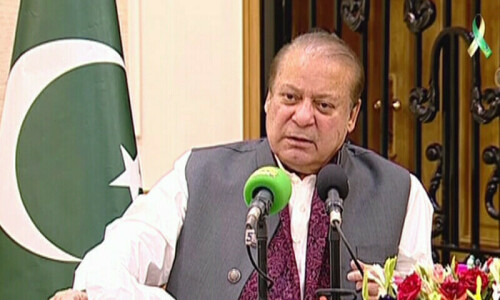
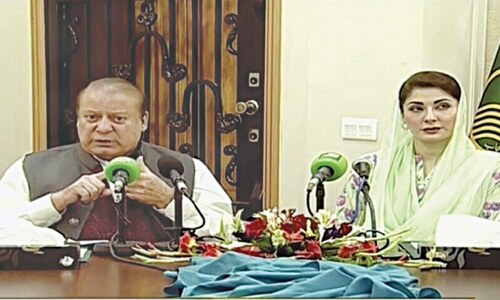
THAT the ongoing electricity crisis could result in political difficulties for the government was obvious from PML-N leader Nawaz Sharif’s ‘address to the nation’ on Friday. The fact that the party supremo himself announced power sops for middle-class consumers confirms that he is making a frantic effort to avert a political crisis in his erstwhile stronghold of Punjab.
Clearly, he wants to rectify the sagging support for his party and is willing to invest personal capital in the pursuit of voters that the party appears to have lost to inflation in general and the escalating energy prices in particular. Mr Sharif also seems to believe that he still has higher approval ratings than his daughter, the Punjab chief minister, and his brother, the prime minister. This would explain why he announced the electricity subsidies, a task that would normally fall to either the prime minister or chief minister.
The announcement of Punjab-specific electricity subsidies also highlights the issue of energy sector provincialisation — both by design and default. Encouraged by greater autonomy under the 18th Amendment, we have seen the provinces trying to gradually venture into cheaper, renewable and hydropower generation. Sindh and KP have also made some strides towards their own transmission network. Such moves indicate a growing awareness among the provinces of the difficulties faced by power consumers due to high prices and blackouts in low-recovery areas.
However, while the problem exists across the country, the Punjab government’s ability to divert Rs45bn from its budget towards significant consumer subsidies — for users of up to 500 units per month during August and September — is a step that only a province flush with cash can afford. Others, especially KP and Balochistan, are still facing significant financial distress in spite of their increased share from the federal tax divisible pool under the NFC award. In fact, both provinces are struggling to balance their budgets and produce the surplus required by the centre to contain the consolidated fiscal deficit within IMF-prescribed limits. Even Sindh has limited room for such subsidies for its citizens in case the PPP wants to follow suit.
While the ruling party expects this relief measure to help it politically in Punjab, the step is not going to sit well with voters from the other provinces. There is every possibility that the anger over power prices there will turn towards the PML-N. Nonetheless, the loss of support in smaller provinces should be less of a worry for the party leadership. The bigger issue is how the IMF, whose executive board is expected to approve the recently concluded $7bn deal, reacts to it. The lender had not taken very kindly to a similar subsidy announced by the federal government for lifeline consumers. Will it ignore Punjab’s extravagance?
Published in Dawn, August 18th, 2024