Chinese firms stockpile high-end Samsung chips as they await new US curbs: report


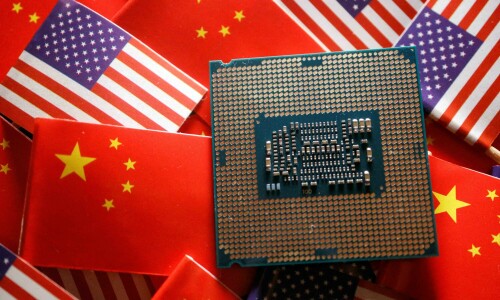
Chinese tech giants including Huawei and Baidu 9888.HK as well as startups are stockpiling high bandwidth memory (HBM) semiconductors from Samsung Electronics in anticipation of US curbs on exports of the chips to China, three sources said.
The companies have ramped up their buying of the artificial intelligence (AI) capable semiconductors since early this year, helping China account for about 30 per cent of Samsung’s 005930.KS HBM chip revenue in the first half of 2024, one of the sources said.
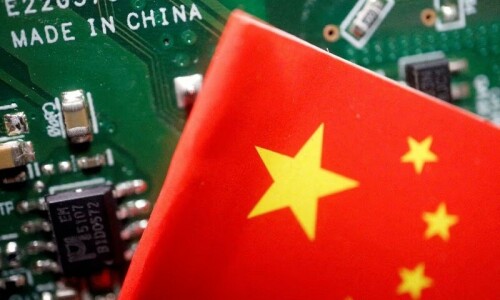
The moves show how China is gearing up to keep its technology ambitions on track amid rising trade tensions with the US and other western nations. They also show how the tensions are impacting the global semiconductor supply chain.
US authorities are planning to unveil an export control package this month that will impose new restrictions on shipments for China’s semiconductor industry, Reuters reported last week, citing sources.
Those sources also said the package is expected to lay out parameters for restricting high bandwidth memory chip access. The US Department of Commerce declined to comment but had said in a statement last week that it is continually assessing the evolving threat environment and updating export controls “to protect US national security and safeguard our technological ecosystem.”
Reuters was unable to determine the details of the proposed HBM restrictions and how they would impact China.
HBM chips are crucial components in developing advanced processors such as Nvidia’s NVDA.O graphics processing units that can be used for generative AI work.
There are only three major chipmakers producing HBM chips — SK Hynix 000660.KS and Samsung from South Korea, and US-based Micron Technology MU.O.
Chinese chip demand has been largely focused on the HBM2E model, which is two generations behind the most advanced version HBM3E, said the sources who are familiar with China’s interest in HBM. The global AI boom has led to a tightness in supply of the advanced model.
“Given that its domestic technology development is not yet fully mature, China’s demand for Samsung’s HBM has become exceptionally high, as other manufacturers’ capacities are already fully booked by American AI companies,” said Nori Chiou, investment director at Singapore-based White Oak Capital Partners.
While it is hard to estimate the volume or value of the stockpiled HBM chips in China, businesses ranging from satellite manufacturers to tech firms such as Tencent 0700.HK have been buying them, the sources said. One of the sources said chip designing startup Haawking recently ordered HBM chips from Samsung.
Huawei HWT.UL, meanwhile, has been using Samsung HBM2E semiconductors to make its advanced Ascend AI chip, according to one of the sources.
Samsung and SK Hynix declined to comment. Micron, Baidu, Huawei, Tencent and Haawking did not respond to requests for comment. The sources did not wish to be named due to the sensitivity of the subject.
Samsung vs HBM rivals
Chinese firms have made some headway in producing HBM, with Huawei and memory chipmaker CXMT focusing on developing HBM2 chips, which are three generations behind the HBM3E model, Reuters reported earlier.
But those efforts could be impacted by the new US rule.
Restrictions on HBM sales to China could have a bigger impact on Samsung than its key rivals which rely less on the China market, said the sources who were briefed on the sales.
Micron has refrained from selling its HBM products to China since last year, while SK Hynix, whose major HBM customers include Nvidia, focuses more on advanced HBM chip production, they said.
SK Hynix said earlier this year it is adjusting production to expand HBM3E output and its HBM chips were sold out for this year and almost sold out for 2025.