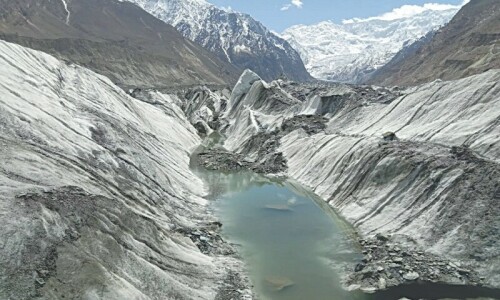
GILGIT: After almost a week-long heatwave in Gilgit-Baltistan, several streams traversing through the mountainous region are experiencing flooding due to a rapid melting of glaciers, with many a road and public and private property swept away.
The localities situated downstream of these rivulets are living in a state of uncertainty due to a rise in water level which officials attributed to the melting of glaciers due to persistent heatwaves in the region.
A flash flood in the Beraldu River in Shiger caused by a melting Baltoro glacier eroded agricultural lands, trees, and a road linking the region with Testun village. The flood created panic in the area, prompting people to take measures to mitigate the damage.
The Hunza River also flew in high flood on Saturday, putting the localities along its bank at risk. Locals said the water eroded agricultural land in Ghalpin, Passu, and Gojal while also causing damage to the Karakoram Highway near Passu.
People living downstream at risk, as flash floods wash away infrastructure; KKH part damaged
The flood also submerged agricultural land and transmission lines in Passu.
In the Danyore nullah, a flash flood damaged a water channel and Manga Road in addition to a channel providing water to the Danyore powerhouse.
In Nomal, the flood in the Hunza River swept away the transmission lines of the 18MW Naltar hydropower station, disrupting the electricity supply to Gilgit.
The Naltar Valley was also flooded. Gilgit city remained without power on Tuesday and Wednesday, but authorities managed to restore it on Thursday evening.
A mudflow in the Roundu area suspended traffic between Baltistan and other areas whereas a similar event near Baghardu blocked the Baltistan Highway. The traffic was later restored at this point.
Shahzad Shigri, the director of GB Environmental Protection Agency, said the water level in rivers and nullahs across the region increased at an alarming level and attributed the phenomenon to climate change.
“There are threats of Glacier Lakes Outburst Floods events and flash floods in the rivers till the end of August, as temperatures rise to a maximum level in this month,” he said, calling the rapid melting of glaciers this summer unprecedented.
The official quoted the data saying there was a 0.5 degrees Celsius rise in average temperature over the past 30 years. Secondly, the snowfall started very late last season, which exacerbated the situation. According to Mr Shigri, snowfall on the mountains in November and December stabilises ice as the snow gets ample time to convert into ice.
The snowfall received in February and March remains unstable and does not convert into ice, he added.
Published in Dawn, August 4th, 2024