Bangladeshi forces killed 32 children during protests, says Unicef


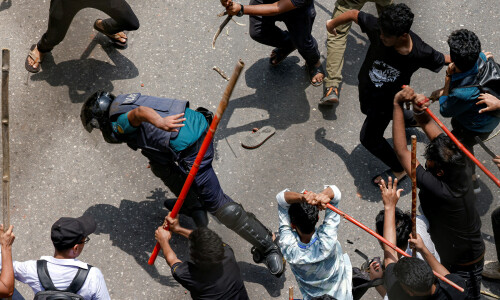
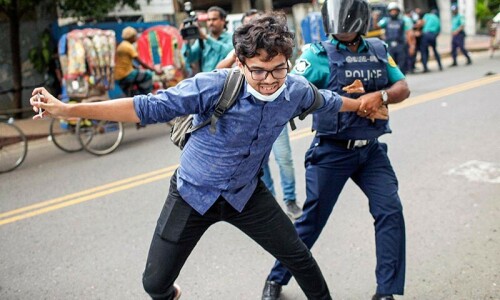
KATHMANDU/DHAKA: At least 32 children have been killed during student protests that engulfed Bangladesh last month, the UN’s children’s agency has said.
“I have just returned from a week in Bangladesh, and I am deeply concerned about the impact of recent violence and ongoing unrest on children,” said Sanjay Wijesekera, Unicef’s Regional Director for South Asia, in a statement issued on Friday.
He said that Unicef confirmed that at least 32 children were killed during July’s protests, with many more injured and detained. This is a terrible loss.
“Unicef condemns all acts of violence. On behalf of Unicef, I extend my heartfelt condolences to families mourning the loss of their sons and daughters. Children must be protected at all times. That is everyone’s responsibility,” said Mr Wijesekera.
Protesting students urge compatriots to cease paying taxes and utility bills to pile pressure on govt
“I am aware of reports that children are being detained and remind authorities that for a child, coming into contact or conflict with the law can be very frightening. In line with international human rights and the UN Convention on the Rights of the Child, to which Bangladesh is a signatory, and based on research into the effects of detention on children,” he said.
“Supporting children caught up in the violence is a priority for Unicef. I visited the Unicef-supported Child Helpline 1098 which has seen a 250 per cent increase in demand since the violence started. I saw how trained counsellors listen to children’s concerns, refer to them the appropriate support and services — and follow up with them.”
Civil disobedience campaign
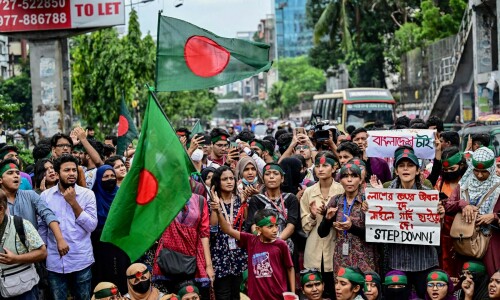
Bangladeshi student leaders on Saturday said they would carry on a planned nationwide civil disobedience campaign until Prime Minister Sheikh Hasina resigned following last month’s deadly police crackdown on protesters.
Rallies against civil service job quotas sparked days of mayhem in July that killed more than 200 people in some of the worst unrest of Hasina’s 15-year tenure.
Troop deployments briefly restored order but crowds returned to the streets in huge numbers this week ahead of an all-out non-cooperation movement aimed at paralysing the government planned to begin on Sunday.
Students Against Discrimination, the group responsible for organising the initial protests, rebuffed an offer of talks with Hasina earlier in the day before announcing their campaign would continue until the premier and her government step down.
“She must resign and she must face trial,” Nahid Islam, the group’s leader, told a crowd of thousands at a monument to ‘national heroes’ in the capital Dhaka to roars of approval.
Published in Dawn, August 4th, 2024