44,000 Afghans in Pakistan still awaiting US, foreign resettlement



At least 44,000 Afghans approved for relocation to Western nations following the Taliban’s return to power are still waiting in limbo in Pakistan, the Foreign Office (FO) said on Thursday.
In the days after the Nato-backed government collapsed in August 2021, more than 120,000 people, mostly Afghans, were airlifted from Kabul in a chaotic evacuation.
Hundreds of thousands more Afghans have fled Taliban rule since then, with many promised new lives in the nations involved in their country’s 20-year occupation.
FO spokeswoman Mumtaz Zahra Baloch said that three years after the Taliban takeover, there were still 25,000 Afghans approved for relocation to the US living in Pakistan.
A further 9,000 Afghans resident in Pakistan have been accepted by Australia, as have 6,000 by Canada, 3,000 by Germany, and more than 1,000 by Britain — all yet to be relocated.
“We have urged them to expedite the approval and visa issuance process for these countries, for these individuals, so that they are relocated as early as possible,” Baloch told reporters at a weekly press briefing.
Most countries shut their Afghan embassies as Kabul fell, and as a result, many parked Afghan migrants in Pakistan while their Islamabad embassies processed their cases.
Many of the Afghans who were promised relocation were involved in the foreign-backed government and are fearful of reprisals by Taliban authorities.
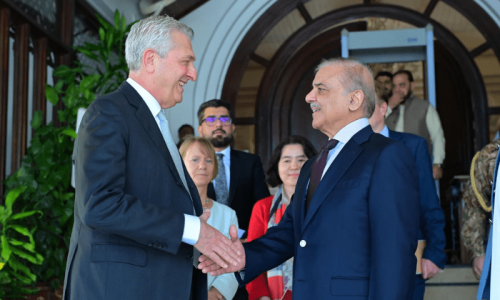
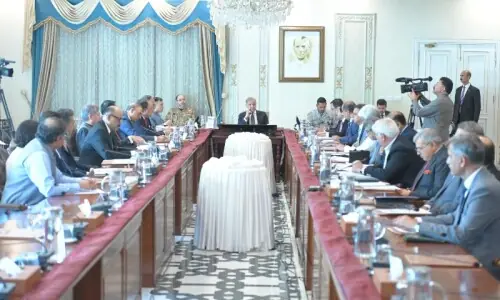
On Tuesday, Prime Minister Shehbaz Sharif pressed the UN High Commissioner for Refugees Filippo Grandi over the backlog of Afghans awaiting relocation, as well as the large numbers of refugees who have arrived with no plans for onward travel.
According to a statement released by his office, PM Shehbaz told Grandi that “the international community must recognise the burden being shouldered by Pakistan while hosting such a large refugee population, and demonstrate collective responsibility.”
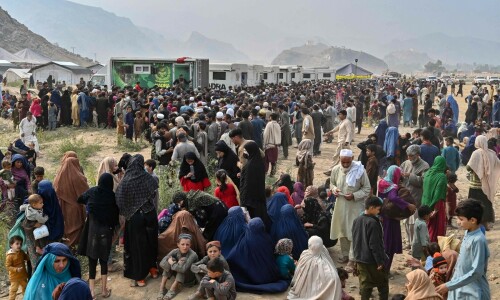
Some 600,000 Afghans have travelled to Pakistan since the Taliban took over and implemented their austere version of Islam.
Millions more came in the four decades before that, fleeing successive conflicts, including the Soviet invasion, a civil war and the post-9/11 US-led occupation.
Since last year, however, Islamabad has waged a campaign to evict huge numbers of undocumented Afghans, as relations with Kabul soured over security.
More than half a million have crossed back into Afghanistan, fearing arrest. On Wednesday, the federal cabinet said it would extend the right of registered Afghan refugees to stay for another year — but continue its push to send those without papers back home.