Deputy PM Dar for ‘normalising’ ties with India



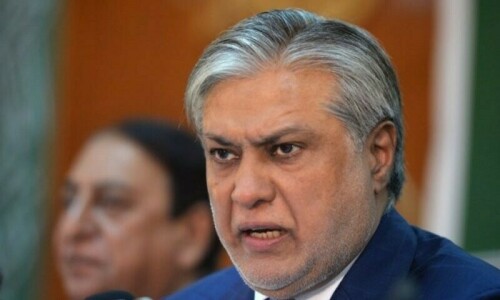
ISLAMABAD: Deputy Prime Minister Ishaq Dar on Tuesday advocated for the normalisation of relations with India, expressing Pakistan’s openness to dialogue, while also outlining conditions aimed at easing tensions between the two nuclear-armed neighbors, who have long been embroiled in disputes.
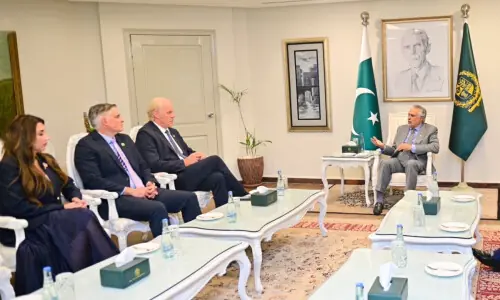
Speaking at the 51st founding anniversary of the government-run think tank Institute of Strategic Studies Islamabad (ISSI), Mr Dar, who also holds the portfolio of foreign minister, said: “Pakistan does not believe in perpetual hostility. We seek good-neighbourly relations with India on the basis of mutual respect, sovereign equality, and a just and peaceful resolution of the long-standing Jammu and Kashmir dispute.”
Urging a break from the debilitating cycle of conflict, Mr Dar emphasised that India and Pakistan owe it to the people of South Asia to prioritise cooperation over discord.
With the region lagging far behind on human development indices, beset by poverty, unemployment, illiteracy, disease, food and water scarcity, natural disasters, environmental degradation, and climate change, he stressed that collective action was imperative to address these pressing challenges, rather than perpetuating a cycle of hostility.
Mr Dar’s comments marked Pakistan’s first formal articulation of its policy towards India under Modi’s third term, following an initial period of wait and see.
Modi, who is likely to be more focused on domestic agenda given his party’s recent electoral setbacks and coalition government, began with a hardline stance on Pakistan. In response to a goodwill tweet from ruling PML-N chief Mian Nawaz Sharif, who also expressed hopes for peace, Modi underscored his government’s dedication to ensuring the “safety and security” of Indian citizens.
The minister said: “In our view, as the BJP-led NDA government starts a new term, it is time for a sober reflection on the future of India-Pakistan relations and the cross-cutting issues affecting the entire region.”
Striking a firm tone, he warned that while the country remains open to comprehensive dialogue on all outstanding issues, it will not acquiesce to unilateral dictates or permit any attempts at hegemony by India.
“We will also take every step needed to maintain strategic stability in South Asia and would respond effectively and decisively to any ill-considered military misadventure by the ‘Hindutva’ driven dispensation in New Delhi,” he warned.
Published in Dawn, June 26th, 2024