In the run-up towards the usual rituals of unveiling the Economic Survey and announcing the budget, the government has given the indication to revive the 13th Five-Year Development Plan (2024–29). This vital aspect of our development performance has been in a moribund status for many years.
Effectively, the ninth Five-Year Plan for the country was the last initiative that was assigned an official status. Later, the planning exercise was replaced by the preparation of medium-term planning frameworks, “vision documents,” and other similar ventures.
Running the country without a plan is akin to subscribing to randomness as the course of action. It is important to note that this regime began its tenure emphasising poverty alleviation, eradication of corruption, and good governance as some of the key references towards economic development.
People of various social and economic brackets were warned that due to the mismanagement of past regimes, tougher economic measures shall be taken with efforts to protect the lower income groups.
Sustainability relies on a people-centric development approach instead of ad hoc schemes that do not allow development practices to evolve
Development, like other sectors of the economy and society, is denominated by political and administrative performance. However, unending ad-hoc measures have defined the regime’s policies till now. The launch and promotion of “sasti roti” schemes (bread at controlled prices) in a few locations is an example. People of middle and lower income groups are forced to live on a day-to-day basis. Rapid and anomalous administrative and political changes do not allow developmental practices to evolve. Besides, hope is very vehemently defeated by fear. At the secondary and tertiary level, the development process is governed by strong and influential muscular interest groups.
The lack of consensus objectives is an inherent weakness that has led to the spiralling fragmentation of society. History has taught that many factors in our sociocultural and administrative environment will remain a perpetual constraint, at least in the near future. Macroscale governmental changes, turnovers, and shifts will continue.
The power structure of the country, which originates from the nexus of military, bureaucracy, political parties/forces, and social-religious-ethnic groups, will remain intact. Changes will continue to emerge through “accidents” and “accidents in the making.”
Public resources for development will remain scarce — there may be marginal variations without any drastic change at least in the near future. A strong and parallel informal economy will continue to thrive under the patronage of interest groups of different origins, affiliations, sizes, and magnitudes.
The absence of a consensus among the key players in development is a barrier. Planners, professionals, decision makers, corporations, realtors, and people all think and act in divergent directions without a commonality of thinking, approach, and strategy. There is no mechanism or space to bring these stakeholders to a platform. Unless they have a common space to think and act, no sustainable development will emerge. Although the ground realities remain intact, there are many trends that can act as catalysts for the developmental process. A viable developmental philosophy must take them into account.
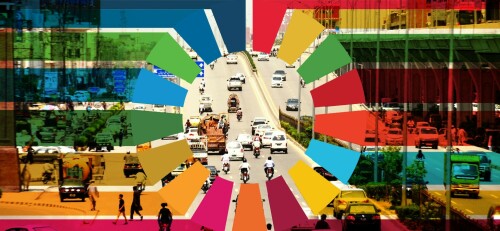
Spatially, the cities and urban areas will expand and become fused with the rural territory. The conventional rural-urban divide that existed a few decades ago will evaporate. In Sindh and Punjab, the major roads and highways are the sites of ribbon developments, many of which have become significant corridors of service sector activities.
Whether transport-related functions such as repair yards of agricultural and livestock machinery or small-scale retail shops, these spaces support a considerable segment of the population, which is all urban in nature.
Urbanisation is acting as the first tread for the social and economic emancipation of the masses, which denotes the death of the old social order dependent on agro-lordship of the feudals and the tyrannical practices. Neo-urban dwellers are obtain a new sense of society and social linkages, which may gradually heals the continuing social dislocation, meanwhile employment opportunities have become diverse and frequent in comparison to the past.
In sum, urbanisation has been going on without direct government support as an ongoing organic process. The 2017 and 2023 census exercises have proved this fact.
Pioneering work in the health, education, welfare services, social and physical infrastructure, and economy is continuing and can be scaled up. Based on the energies of some committed nongovernmental organisations, and community groups and individuals, the pioneering work in each of the above sectors has become a reality.
Our developmental philosophy should be people-centric. Plans and actions that are beneficial to society at large must be upheld. Laws, rules, regulations, bylaws, standards, and packages should all be built up around this fundamental concept. Three traditional actors that are vital in developmental affairs are the politicians, decision makers (where uniformed or otherwise), planners, professionals, and the people.
A gradual realisation of their changing role must be propelled through conscious efforts. For instance, politicians used the developmental process to gain mass popularity. The desired role is to understand developmental needs, create an enabling environment, and prepare policymakers’ desires into plans and programmes.
They are supposed to understand the ground realities of society, take an independent position, and prepare appropriate solutions. People were only considered recipients of development. However, their role must be redefined as that of partners in development. Besides, they should be empowered to frame their developmental choices.
The writer is an academic and researcher based in Karachi
Published in Dawn, The Business and Finance Weekly, June 24th, 2024