SC takes suo motu notice of Faisal Vawda’s tirade



ISLAMABAD: The Supreme Court on Thursday swung into action against Senator Faisal Vawda, taking suo motu notice of his anti-judiciary rhetoric.
An SC bench comprising Chief Justice Qazi Faez Isa, Justice Irfan Saadat Khan and Justice Naeem Akhtar Afghan is likely to take up the matter on Friday (today).
On Wednesday, two senators held separate pressers, questioning the Islamabad High Court (IHC) judges’ claim that intelligence agencies had interfered in the judicial affairs. Without any evidence no one had the right to point a finger at the institutions, they added.
At his press conference, Senator Vawda had said that the trend of targeting institutions must stop. He asked why Justice Babar Sattar had raised his voice after one year of alleged interference. If the judges had any evidence they should come forward [and] “we will stand beside you”, but institutions should not be targeted on the basis of mere accusations, he added.
Mr Vawda also said that he had requested the IHC for details of correspondence between then-IHC chief justice Athar Minallah and Justice Sattar on the issue of the latter’s green card, but despite the passage of 15 days, he had not been provided the required details. He said if a senator is being denied his right to get information, how could a common man do so.
He requested the Supreme Judicial Council to take notice of the matter.
After Mr Vawda’s presser, PML-N Senator Talal Chaudhry also held a presser, saying that a judge never writes a letter rather he issues notice for any interference.
The senator said that those who can’t face pressure situations should not accept the responsibility of a judge. He said common people were not getting relief from courts and wondered who they should write a letter for relief.
It may be mentioned that IHC registrar’s office had responded to Mr Vawda on May 14. Additional Registrar Ijaz Ahmed stated that information related to residency or citizenship is not included in the requirements for the appointment of a judge in the high court.
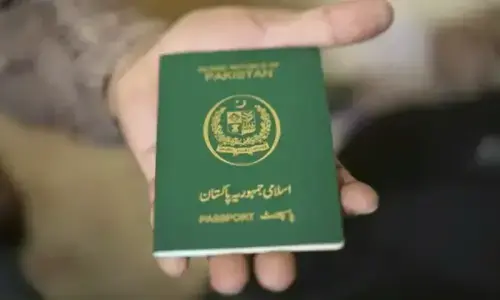
Interestingly, the Judicial Commission of Pakistan (JCP) had in 2013 rejected the name of senior lawyer Anis Jilani for appointment as the IHC judge because of his dual nationality.
Mr Jilani was born in Chicago and his name was deferred because of his US nationality, prompting him to rescind his citizenship to become eligible to become a high court judge. However, the JCP subsequently elevated Justice Miangul Hassan Aurangzeb.
In his letter to Mr Vawda, the additional registrar stated that “the conversation between potential candidates for appointment as judge or/an interview with the Hon’ble Chief Justice and/or Senior Puisne Judge of High Court is not a communication of which record is maintained and minutes taken”.
As per the letter, there was no written record with the IHC regarding the discussion in the JCP on Justice Sattar’s green card.
Published in Dawn, May 17th, 2024