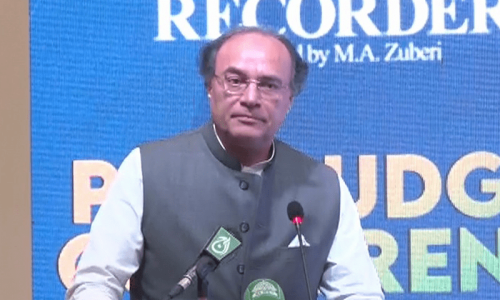
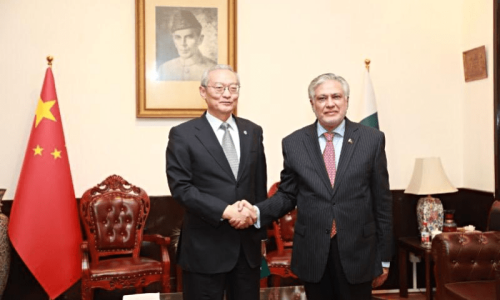
The International Monetary Fund (IMF) has not asked Pakistan to hike up energy prices but does want it to withdraw subsidies granted in various sectors, including energy, according to Senator Saleem Mandviwalla.
IMF official Esther Perez Ruiz informed Dawn.com that a delegation from the lender will meet Pakistani authorities next week to discuss the “next phase of engagement”.
“A mission team led by Nathan Porter, IMF’s mission chief to Pakistan, will meet with authorities next week to discuss the next phase of engagement,” she said.
“The aim is to lay the foundation for better governance and stronger, more inclusive, and resilient economic growth that will benefit all Pakistanis,” she added.
Last week, the Fund said that a mission was expected to visit Pakistan this month to “discuss the FY25 budget, policies, and reforms under a potential new programme for the welfare of all Pakistanis”.
Speaking on Dawn News programme Doosra Rukh, Senator Mandviwalla said the IMF team will be in Pakistan on May 15 and stay in the country for two weeks, adding that he expects “things to be finalised” during that time.
“The IMF has not imposed any new conditions,” he said. “I do not see any hurdles nor disruption to the agreement.”
The senator added that the IMF has not asked Pakistan to increase or decrease the prices of petrol, gas or electricity. “Their main condition is that they (those commodities) are being sold in compliance with international standards,” he clarified.
He said the IMF has requested an end to subsidies in various sectors, including energy. “The IMF has instructed us not to give subsidies and to end those that have already been given,” Mandviwalla added.
“They haven’t told us to increase or decrease prices by a certain amount, but they have given us a formula,” he said.
In response to a question about the impact on the common man of cutting subsidies, Senator Mandviwalla said that the subsidies were only for “certain sectors” and that the public saw “very little benefit” from.
“The subsidies the IMF is talking about are only benefitting certain people, not the public at large,” the senator clarified, adding that the IMF has encouraged subsidies in other sectors and projects such as the Benazir Income Support Programme.
Regarding the budget, he admitted that it would be “difficult” to grant relief to the people in the next budget. “The government does not have enough space to provide relief to anyone.”
Mandviwalla said that the IMF team may want to meet the main opposition party, the PTI.
“My personal opinion is that the IMF will also meet the PTI. They try to speak with every party,” he said, adding that they will take their points of view and possibly ask for a commitment.