34 firms get licences for making electric vehicles



ISLAMABAD: The Engineering Development Board (EDB) has issued 34 licences to manufacturers of two- and three-wheelers under the Electric Vehicles Policy for 2020-2025, as part of the transition from traditional fuel-powered automobiles to EVs.
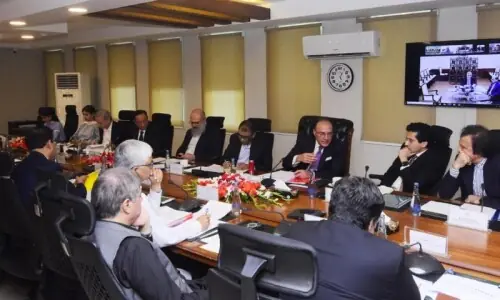
At the same time, private partners are jumping into EV manufacturing, said Asim Ayaz, a senior EDB official, in a speech during a webinar at the Sustainable Development Policy Institute (SDPI) on “Pakistan’s electric vehicle market: challenges, opportunities, and the 2030 agenda” on Monday.
Mr Ayaz said the most pressing issue was the lack of financing for customers as EVs were more expensive than fuel-based vehicles due to the high price of batteries. He said the ministry had proposed that every petrol station have an EV charging station.
“The ministry has compared the National EV Policy with Malaysia’s and found that it is good in tariff. But we lack funding streams and financing solutions,” he said.
“The ministry is closely working with the Lahore University of Management Sciences (Lums) and other industry partners for adoption of EVs.”
Dr Arshad, a professor at Lums, emphasised that significant money was available for EVs on a worldwide scale, and the government would not need to rely on the IMF or World Bank for finance because the global community wants EVs as a means to cut carbon emissions rather than for economic development.
“Pakistan can tap that money by linking its EV transition ambition with GHG emissions, aligning it with GHG reduction perspective,” said Dr Arshad.
He further stated that global climate finance might be administered through a competitive procedure that would favour only well-planned and superior projects.
“The faster we go, the faster we will reach our goal,” he said. Midhat Waris said Shell Global had the world’s largest EV setup, with over 1000 charging stations, and it had tested its rapid chargers in Pakistan.
She also dwelt on the launch of Shell’s largest EV charging station in China, which has a capacity of 250 outlets. “We want to take key positions in terms of EV charging in Pakistan and K-Electric partnership is vital to achieving this ambition,” Waris said.
Japanese resistance
Dr Naveed Arshad said battery technology was evolving and demanded research and development, along with capital and technical resources.
Ahmed Sajeel of Deewan Motors BMW said Japanese car makers were resisting EVs, but their resistance was unsustainable in the current environment as the international vehicle industry had opted to shift to EVs.
He claimed that the Ministry of Climate Change is “highly friendly” and supportive of EVs, but the country needed a long-term regulatory framework to work effectively and avoid further delays.
Electric vehicles alone are not the solution, but infrastructure is essential, and manufacturing them locally is the way ahead because Pakistan is rich in silica and other raw minerals, he noted.
Dr Aazir Anwar Khan said EVs would have a significant impact on the middle class, which currently relies on two or three-wheelers.
“Air quality and environmental hazards are huge in the country due to transport sector emissions, whereas 60 per cent of imported oil is being consumed by motorbikes,” he added.
The country aims to move immediately from fuel-powered automobiles to EVs and the outlook for such a transition was favourable, Dr Aazir observed.
Published in Dawn, April 9th, 2024