THE Indian National Congress and Aam Aadmi Party (AAP) have been political rivals, but they have also emerged as the most outspoken critics in a 27-party alliance of “crony capitalism”, which has come to imply a nexus between Prime Minister Narendra Modi and tycoons — in particular the Ambani and the Adani groups.
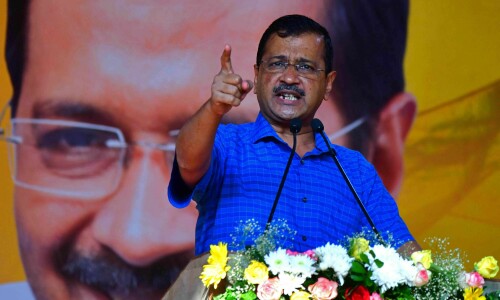
The arrest of Delhi chief minister and AAP chief Arvind Kejriwal from his official residence on Thursday is being seen as retribution for the two parties coming together to pose a challenge to Mr. Modi in Delhi, Punjab, Goa and even in his home state of Gujarat.
The widening chorus of protests from opposition parties over the arrest has further galvanised an alliance, which was looking frayed and lacklustre against Mr Modi’s heavily-financed buntings and cut-outs and his near total control of the media.
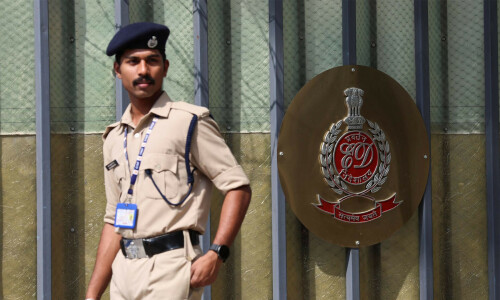
A court on Friday ordered that Mr Kejriwal be remanded in custody of the financial crime agency following his arrest over corruption allegations.
The Modi government was also hoping to divert the focus from the can of worms that has been opened with the revelations after the apex court ordered that the secretive electoral bonds be disclosed, since the biggest beneficiary of the corporate largesse is the Bharatiya Janata Party (BJP).
Mr Kejriwal was produced in a trial court in Delhi on Friday afternoon.
After he was detained, his lawyer Shadan Farasat told the AFP news agency: “We are considering our next course of action.”
Meanwhile, dozens of AAP leaders have been detained in the capital and sporadic protests erupted elsewhere across India against Mr Kejriwal’s arrest, weeks before general elections. AAP leaders have said that they will continue their protests and will hold one outside the prime minister’s residence.
“Kejriwal has been arrested to stop him from campaigning in the general elections,” said AAP leader and Delhi finance minister Atishi Singh. “This is a way to steal elections,” she added in a statement.
Mr Kejriwal is the third AAP leader to be arrested over the alleged corruption case related to a now-scrapped liquor policy in Delhi. The Enforcement Directorate also arrested Mr Kejriwal’s deputy, Manish Sisodia, and AAP lawmaker Sanjay Singh in the same case last year.
Since coming to power in Delhi in 2013, AAP secured significant victories in Punjab’s state elections in 2022 and gained a few seats in Mr Modi’s home state of Gujarat in the same year.
Opposition outcry
Alluding to Mr Modi, Rahul Gandhi wrote on X: “A scared dictator wants to create a dead democracy.” “The arrest of elected chief ministers has become a common thing,” Mr Gandhi wrote. He also called the arrest an attack on India’s democratic principles.
Sharad Pawar, leader of the Nationalist Congress Party (Sharadchandra Pawar), said that Mr Kejriwal’s arrest showcases the “depth to which BJP will stoop for power”.
The BBC quoted Samajwadi Party chief Akhilesh Yadav said Mr Kejriwal’s arrest would “give birth to a new people’s revolution”. “BJP knows that it will not come to power again, due to this fear, it wants to remove the opposition leaders from the public by any means at the time of elections, arrest is just an excuse,” he posted on X.
Pinarayi Vijayan, the chief minister of Kerala, said Mr Kejriwal’s arrest “outright vicious and part of a callous plot to silence all opposition voices just ahead of the general elections”.
His counterpart in Tamil Nadu, M.K. Stalin, said: “Not a single BJP leader faces scrutiny or arrest, laying bare their abuse of power and the decay of democracy.” “The relentless persecution of opposition leaders by the BJP government smacks of a desperate witch-hunt. This tyranny ignites public fury, unmasking BJP’s true colours,” Mr Stalin said.
In the past year, several opposition leaders have been imprisoned, questioned, or had cases filed against them by federal agencies.
K. Kavitha, leader of the Bharat Rashtra Samithi (BRS), was arrested in the same case as Mr Kejriwal just days ago. She denies the allegations. In January, Hemant Soren, former Jharkhand chief minister and leader of the opposition Jharkhand Mukti Morcha (JMM), was arrested by a federal tax agency on charges of money laundering and land-grabbing. Mr Soren denies the allegations.
Mr Gandhi himself was convicted of criminal libel last year after a complaint by a member of the BJP.
His two-year prison sentence saw him disqualified from parliament for a time until the verdict was suspended by a higher court in August last year.
Published in Dawn, March 23rd, 2024