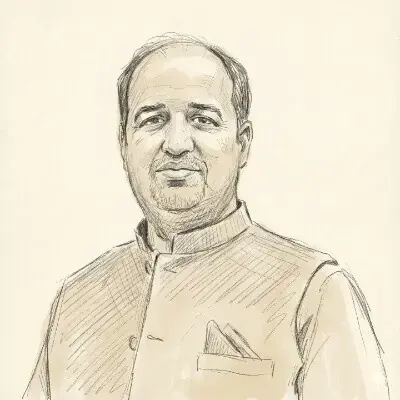
ISLAMABAD: Perturbed by the alarming number of 26.2 million out-of-school children (OOSC) across the country, the newly appointed education minister, Dr Khalid Maqbool Siddiqui, on Wednesday called for imposing an ‘education emergency’ to address the issue.
He made these remarks while chairing a meeting on the affairs of the education ministry at the ministry headquarters. Dr Siddiqui, who is also the science and technology minister announced his “intention to advise Prime Minister Shehbaz Sharif and the federal cabinet to declare a national education emergency”, said a statement issued after the meeting.
“This declaration aims to bring back these out-of-school children into the education system, ensuring that no child is left behind,” the minister was quoted as saying.
Siddiqui calls for strategy to train one million workers in IT
It is relevant to note that the Pakistan Education Statistics in its recent report for 2021-22 pointed out that there were 26.21 million OOSC in the country. The report stated 39pc children in Pakistan were out of school: 11.73 million of such children were in Punjab, 7.63m in Sindh, 3.63m in KP, 3.13m in Balochistan, and 0.08 million in Islamabad.
Besides the OOSC crisis, the country is also facing a low literacy rate of 62 pc. Likewise, the government’s dismal spending in the education sector is also a matter of concern. The Economic Survey of Pakistan released last year revealed that only 1.7 pc of Gross Domestic Product (GDP) was being spent on education. Whereas, disparity in the availability of essential facilities – such as toilets, potable water, and boundary walls in schools, located in different areas of the country is also a matter of concern, a large number of schools across the country, particularly in the peripheries, are without potable water and other basic facilities.
Meanwhile, the minister directed for a strategy to train one million technology and IT-skilled workers.
This initiative will be funded by the National Vocational and Technical Training Commission (NAVTTC), to equip the workforce with the necessary skills to thrive in a rapidly evolving technological landscape.
In addition to addressing the educational needs of children, Minister Siddiqui unveiled plans for a ‘school meals programme’ to be implemented in all state-run primary schools in the capital. This initiative will not only ensure proper nutrition for students but also promote their overall health and hygiene.
The minister underlined the government’s unwavering commitment to improving access to quality education for all. He stressed the importance of focusing on girls’ education to narrow the gender literacy gap, recognising it as a crucial step towards achieving national development goals.
To further these objectives, the statement said that Minister Siddiqui announced that a national conference will be organised in collaboration with the Special Investment Facilitation Council (SIFC).
This conference will aim to address the issue of out-of-school children and combat learning poverty by leveraging the transformative power of technology. In conclusion, the minister reiterated the government’s dedication to revolutionising the education sector in Pakistan by implementing comprehensive strategies and fostering collaboration with key stakeholders.
Published in Dawn, March 21st, 2024