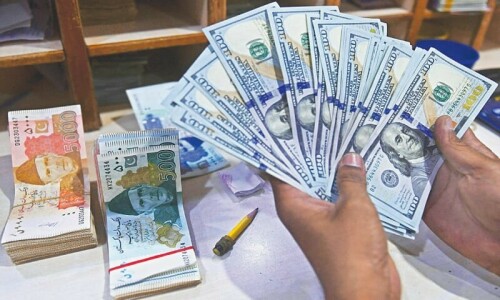
KARACHI: The budgetary borrowing surged by 59 per cent during the first eight months of the current fiscal year, reflecting the higher government spending.
The State Bank’s latest data shows that the government borrowed Rs3.395 trillion during July-Feb FY24 compared to Rs2.136tr in the same period last year, an increase of 59pc or Rs1.259tr.
This high growth in budgetary borrowing was due to a whopping increase in debt servicing, eroding the impact of more than targeted revenue generation during that period.
According to a finance division report, the interest expense during July-Dec FY24 stood at around Rs4.2tr of which 88pc was interest on domestic debt. The government’s stock of domestic debt was about Rs43tr till January this year.
Six-month interest expense reaches Rs4.2tr
The size of interest has been growing during the current fiscal year due to a 22pc policy rate. The government has been borrowing from banks at a rate of 20-21pc which caused accumulation of costly domestic debt.
The government’s expenditure rationalisation measures led to a federal primary surplus of Rs1.5tr, resulting in a fiscal deficit of Rs2.7tr.
According to the finance ministry, around 77pc of the financing of federal fiscal deficit was carried out through domestic sources while 23pc through external sources. The government retired short-term treasury bills of around Rs1tr during in the past six months.
The eight-month FY24 budgetary borrowing reached close to the borrowing made during the entire FY23 of Rs3.7tr and that of Rs3.133tr for FY22.
Due to unexpectedly higher average inflation of about 28.7pc for the last seven months, the State Bank was unable to bring down the interest rate. The government was compelled to borrow through domestic bonds at 20-21pc.
As the State Bank is scheduled to announce its monetary policy on March 18, bankers believe that the government would not be able to get cheaper money even if the interest rate is reduced by one per cent.
Experts believe that for the government to get cheaper money, the rate should not be above 15pc.
They said the interest expense which reached 88pc of Rs4.2tr will continue to expand with the prevailing interest rate of 22pc.
It also indicates that the government will not be able to curtail the fiscal deficit during the current financial year despite higher revenue generation.
The interest payments have made the banks rich as most of them operating in Pakistan announced 70-100pc jump in their profits in the calendar year 2023 mainly due to interest income.
Published in Dawn, March 16th, 2024