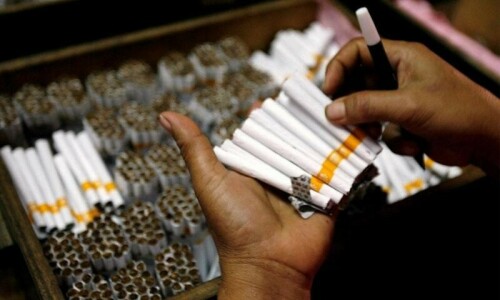
ISLAMABAD: While a study has found that absence of a clear strategy regarding tobacco industry resulted in a loss of Rs567 billion in the past seven years, health activists have demanded increase in taxes on cigarettes instead of utilities.
Indus Broadcasting Corporation (IBC) has exposed the staggering loss to the national exchequer in a policy paper titled ‘Rethinking Tobacco Taxation in Pakistan: A Call for Immediate Reforms’.
The study has quoted the revenue targets of the Federal Board of Revenue (FBR) from the cigarette industry and the tax collected in seven years.
The IBC has recommended the government to align the tobacco taxation policy with the guidelines of the World Health Organisation (WHO) and safeguard it from the industry’s infl uence.
“Prioritise public health over industry interests, recognising the health and economic burden of tobacco consumption,” the policy paper recommended.
“Federal Excise Duty (FED) on cigarettes, a major source of tobacco taxation, has been manipulated by powerful businesses to safeguard their interests at the expense of public health,” it said.
Meanwhile the Society for the Protection of the Rights of the Child (Sparc) has suggested that the government prioritise increasing taxes on cigarettes to reduce the health cost burden and economic crisis.
Country Head of the Campaign for Tobacco-Free Kids Malik Imran Ahmad stated that Pakistan faced a considerable challenge in combating the tobacco menace. He also presented statistics showing a high prevalence of tobacco use in the country, with 31.9 million adults (15 years and above) consuming tobacco products, accounting for about 19.7pc of the adult population.
He further added that tobacco-related illnesses, such as cancer, diabetes and heart diseases, contributed to over 160,000 deaths annually in Pakistan.
“These deaths not only affect individuals but also have broader impacts on families, communities and the healthcare system,” he said.
Sparc Programme Manager Dr Khalil Ahmad highlighted that low cigarette prices were the reason why children and youth initiated smoking. He said smokingrelated illnesses and deaths incurred substantial economic costs, amounting to 1.6pc of Pakistan’s GDP each year.
Published in Dawn, March 3rd, 2024