Russian court jails veteran activist Oleg Orlov for 2.5 years


 0
0


A Russian court on Tuesday sentenced top human rights campaigner Oleg Orlov to two and a half years in jail for denouncing Russia’s assault on Ukraine.
The 70-year-old, a key figure of the Nobel Prize-winning Memorial group, is the latest target of Kremlin repression, which has intensified since the offensive in Ukraine.
“The court has determined Orlov’s guilt and orders a sentence of two years and six months […] in a general regime penal colony,” the judge said.
Orlov was accused of discrediting the Russian army in a column written for the French online publication Mediapart, and fined in October after a first trial.
The fine was a relatively lenient punishment and prosecutors called for a new trial.
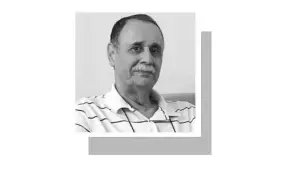
As the judge read the verdict, the bespectacled, white-haired activist winked at his wife, fellow activist Tatyana Kosatkina.
He was taken into custody in the courtroom and asked Kosatkina to come over. “You promised me!” he told her as she appeared to tear up.
‘Keep working’
Having worked with her husband at the human rights organisation Memorial, Kosatkina said that “the most important thing now will be to keep working”.
“We couldn’t have lived anywhere else. Staying in Russia was our joint decision,” she told AFP after the trial.
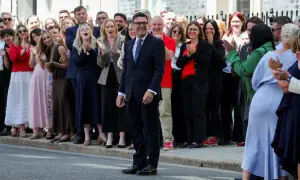
Flanked by police officers, Orlov left the courtroom to the applause of some 200 supporters crammed along the corridors of the tribunal.
The trial was “unfair and cruel” said Sofia, a 22-year-old archivist from Moscow.
“But we have to carry on working and thinking as we did before. The last thing Oleg wants is for us to cry,” she told AFP outside the court.
Russian activist Yan Rachinsky was also in the crowd. “We have reverted to the Soviet regime, when what is not on its side is declared a lie,” he told AFP.
Rachinsky had worked alongside Orlov at Memorial, which co-received the Nobel Peace Prize in 2022.
Created in the late 1980s, Memorial established itself as a key pillar of Russian civil society by preserving the memory of victims of communist repression and by campaigning against rights violations.
Russian authorities officially disbanded the organisation in late 2021 amid an already tightening repression.
‘Not many people left’
The Kremlin’s assault on Ukraine in February 2022 only accelerated the crackdown on critical voices.
Many fled or were put in jail.
“There are not many people left […] and even less (politically) active people,” Rachinsky told AFP.
And for Alexei, a 61-year-old chess coach who has known Orlov since 1989, the trial meant that “we’ve lost another important chess piece in our camp”.
Even as many campaigners fled the growing repression, Orlov refused to leave the country.
He told AFP that his career spent working to document rights abuses in modern Russia — especially in the North Caucasus — gave him no choice but to also campaign against the Ukraine offensive.
He even used his own trial as a platform against the conflict in Ukraine.
Thousands of people have been detained or fined for speaking out against the offensive.
‘Kafkaesque farce’
On the eve of the verdict, he said he had no regrets, but neither he nor his supporters held any illusion about the outcome of the trial.
Even before the ruling, activist Svetlana Gannushkina told AFP that the verdict “had nothing to do with the law”.
“To be judged for statements calling for peace and criticising the authorities is completely absurd,” she said.
The two-and-a-half-year verdict was immediately denounced by Human Rights Watch’s Associate Director for Europe and Central Asia, Tanya Loshkina.
“The case against Oleg Orlov is a Kafkaesque farce,” Loshkina said in a statement.
US Ambassador Lynne Tracy joined in the condemnations, saying she was “dismayed and concerned” by the decision.
“The Kremlin’s suppression of the constitutionally guaranteed rights of Russians throws the country back into a time of darkness, danger, and isolation,” she said.
Orlov’s sentencing comes 10 days after Russia’s top opposition politician Alexei Navalny died in a Russian prison, prompting outrage and condemnation from Western leaders and his supporters.