UNITED NATIONS: In the midst of intricate political challenges in Pakistan, three pivotal issues unfolded on the global stage at the United Nations this week, with profound implications for Islamabad.
The seriousness of the water crisis took centre stage during a UN Security Council meeting in New York, with Pakistan stressing the crucial importance of upholding the Indus Water Treaty. Pakistan’s dedication to addressing urgent challenges posed by the water crisis, as highlighted by the Pakistani mission at the United Nations, underscores its unparalleled impact on the country’s future trajectory.
Following this, a significant debate on human rights ensued, where Pakistan emphasised the necessity of transcending mere political concerns and redirecting attention towards the economic rights of the underprivileged.
In a separate discussion on UN Security Council reforms, Pakistan reiterated its commitment to exclusively supporting the inclusion of non-permanent members in the 15-state council, underlining its strategic stance for the future.
Sees threat in India’s Chenab dam, urges arbitration
While the trio of issues prompts a momentary departure from political theatrics, the seriousness of the water crisis stands out as particularly profound.
Pakistan views the 1960 Indus Water Treaty as a significant international agreement, crucial for averting armed conflicts in a sensitive region. The presence of nuclear weapons in China, India, and Pakistan amplifies the gravity of the situation.
The Indus Water Treaty is a water-sharing agreement between Pakistan and India, facilitated by the World Bank. It allocates the waters of the Indus River system between the two countries.
At the climate debate, Pakistan argued that adherence to the treaty remains crucial for managing shared water resources with India. Munir Akram, Pakistan’s UN envoy, highlighted rising water demand and climate change impacts, leading to potential trans-boundary disputes.
The Indus basin is the largest contiguous irrigation system globally, providing food security to over 225 million people in Pakistan. It also serves as the largest global store of water, apart from the Northern and Southern ice caps.
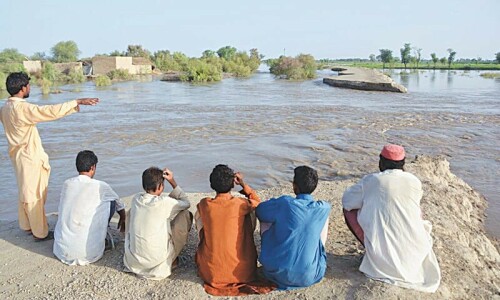
To reinvigorate this water body, Pakistan has launched the multi-dimensional Living Indus project. Pakistan informed the UN body that extreme temperatures are melting these glaciers at an alarming rate, and this, together with heavier monsoons, leads to massive floods, like the catastrophic floods that devastated Pakistan in 2022, causing damage over $30 billion.
India, however, wants a greater share of the Indus Basin water by modifying the treaty, and it also opposes discussing the issue at international fora. Apparently, that’s why India avoided treaty references at the UNSC debate.
Pakistan views India’s Chenab River dam in the held Jammu and Kashmir as a significant threat to its water needs and advocates resolving the issue through arbitration, as the treaty suggests.
Tensions have been further intensified by India’s objection to Article IX of the treaty. This article establishes a dispute resolution mechanism, which India disputes, opposing Pakistan’s efforts to seek arbitration.
Published in Dawn, February 19th, 2024