Destruction of Gaza by Israel to make ‘buffer zone’ a war crime: UN


GENEVA: Israel’s reported ongoing destruction of all buildings along the border inside Gaza with the aim of creating a “buffer zone” is a war crime, the United Nations rights chief warned on Thursday.
In a statement, Volker Turk pointed to reports that the Israeli military is working inside the Gaza Strip to destroy all buildings within a kilometre of the border fence with Israel with the objective of creating a “buffer zone”.
“I stress to the Israeli authorities that Article 53 of the Fourth Geneva Convention prohibits destruction by the occupying power of property belonging to private persons, except where such destruction is rendered absolutely necessary by military operations’,” he said.
Turk warned that the objective of creating a buffer zone for general security purposes did “not appear consistent with the narrow ‘military operations’ exception set out in international humanitarian law”.
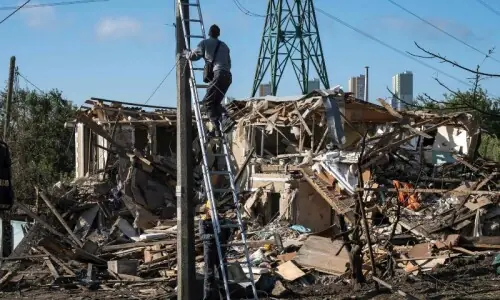
The world body records widespread demolition by the Israeli military of civilian infrastructure
He added that such “extensive destruction of property, not justified by military necessity and carried out unlawfully and wantonly, amounts to a grave breach of the Fourth Geneva Convention, and a war crime”.
‘May constitute war crime’
The UN High Commissioner for Human Rights said that since October his office had recorded “widespread destruction and demolition by the (Israeli military) of civilian and other infrastructure”.
This included “residential buildings, schools and universities in areas in which fighting is not or no longer taking place”, he said.
He said such demolitions had also been seen in Beit Hanoun and Gaza City in the north of the besieged Palestinian territory, and the Nuseirat camp in central Gaza, while numerous residential buildings had reportedly been demolished in Khan Younis in the south in recent weeks.
“Israel has not provided cogent reasons for such extensive destruction of civilian infrastructure,” Turk said.
“Such destruction of homes and other essential civilian infrastructure also entrenches the displacement of communities that were living in these areas prior to the escalation in hostilities,” he warned.
In fact, he said, they appeared “to be aimed at or (to have) the effect of rendering the return of civilians to these areas impossible”.
“I remind the authorities that forcible transfer of civilians may constitute a war crime.”
Published in Dawn, February 9th, 2024