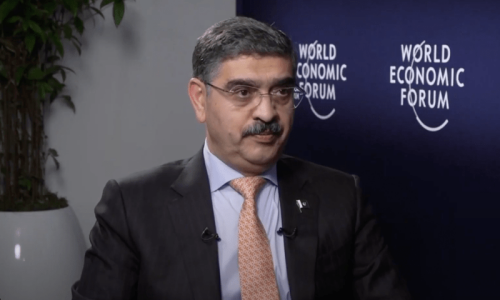
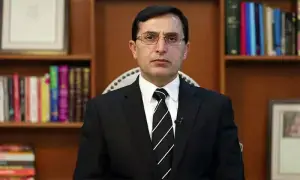
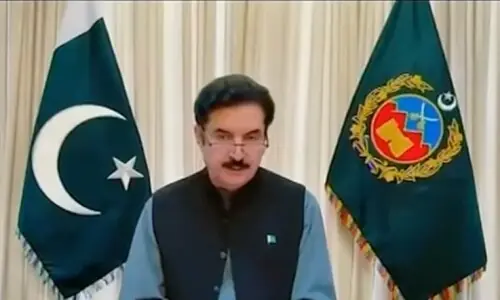
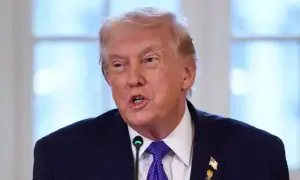
CARETAKER Prime Minister Anwaar-ul-Haq Kakar told a CNBC interviewer during his recent trip to Davos that the media in Pakistan was “freer than in the West”, while arguing that Western media operates under far more regulations compared to the media in Pakistan.
Mr Kakar’s words brought to mind a similar statement made by former prime minister Imran Khan during his tenure, when he had made the same appraisal of press freedoms in Pakistan in response to a probing question by a foreign interviewer.
The answer had been as scandalising to practising journalists then as it is now. Taken without context, their words seemed to suggest that the relative lack of formal regulatory oversight gives Pakistani media some sort of qualitative edge. Anyone familiar with the country and its media landscape knows that this is clearly not the case.
The truth is that whenever the Pakistani media and working journalists have attempted to assert their freedoms in recent years, they have invariably been made to pay a very heavy price for it.
Starting from the days when Nawaz Sharif last fell out of favour with the establishment, powerful operators acting behind the scenes have used progressively coercive means to whip the media into lining up with their narratives. This publication is among those that were made to suffer the worst of such practices.
So weary have media practitioners now become of the sword constantly hanging above their necks that various journalists’ and media workers’ representative bodies resolved this past weekend to begin pushing back against it.
The Coalition for Free Media, as it is being called, is a welcome effort that had been long awaited. It is hoped it will be able to wrest back a modicum of the independence Pakistani media has been gradually deprived of over the last decade.
From high-profile abductions that have gone unquestioned to unresolved murders of journalists, the Pakistani media fraternity has suffered much in silence, while being forced to cede more and more control over editorial decision-making to unaccountable individuals.
Press ‘advisories’, a relic of the Zia era, now seem to be issued every week. Both overt and veiled threats are issued periodically, ensuring that few dare question the state’s diktats.
There is a growing realisation that protecting press freedoms is no longer a question of self-preservation or interest: it is clear that the Fourth Estate cannot continue to watch out for the public interest and fulfil its duty to speak truth to power if it allows itself to continue to be divided and exploited by a predatory state.
In this suffocating environment, more and more journalists and media practitioners are realising that their safety is in presenting a united front. More power to those leading the change.
Published in Dawn, January 23rd, 2024