World Food Programme seeks over $26m to resettle Afghans



WASHINGTON: As a senior US official is due in Islamabad on Monday (today) for talks on the resettlement of Afghan refugees, the UN World Food Programme (WFP) is seeking $26.3 million to help the displaced Afghans.
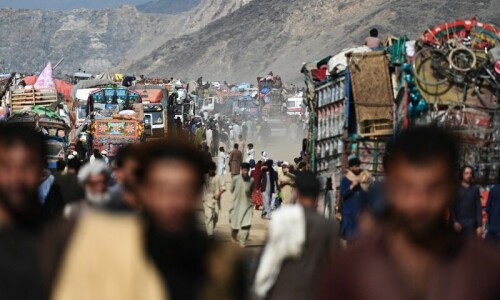
On Sept 15, Pakistan ordered all Afghans illegally residing in the country to leave by November 1 or face deportation. The order affects around 1.7m Afghans residing in the country, though figures on the undocumented population vary.
Since then, more than 370,000 people have made their way back to Afghanistan, where a harsh winter awaits them, the UN agency said in a statement.
US Assistant Secretary of State Julieta Valls Noyes’ three-day visit to Islamabad from Dec 4 to 7 will focus on the resettlement of some of these refugees in the US.
US Assistant Secretary Noyes due in Islamabad today
The “primary focus” of the visit “is to expedite the safe relocation and resettlement of Afghan refugees currently in the US immigration pipeline and … enhance collaborative efforts to protect vulnerable individuals,” the US State Department said.
WFP is on the ground at two border crossings supplying families with cash to cover their most basic food needs.
Returnees face a bleak future in Afghanistan, where one-third of the people do not know where their next meal will come from, and some areas in the west are still reeling from multiple earthquakes.
Funding shortfalls have forced WFP to cut emergency assistance this year.
In March, the UN refugee agency UNHCR noted that Pakistan has hosted 1.35m registered refugees. The organisation praised Pakistan for its long and commendable tradition of providing protection to refugees and asylum-seekers.
The UN statement pointed out that the current number comprises mainly Afghan refugees holding Proof of Registration (PoR), as well as a small number of non-Afghan refugees and asylum-seekers from other countries such as Myanmar, Yemen, Somalia, and Syria.
But Pakistan has faced regular criticism from human rights advocacy groups since it ordered the deportation of undocumented foreigners. Both UN agencies and the US have urged Pakistan to reconsider its refugee policy.
Published in Dawn, December 4th, 2023