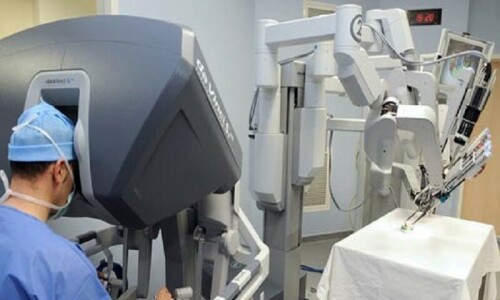
KARACHI: Several senior doctors and surgeons on Friday put their weight behind interim Health Minister Dr Saad Niaz and disapproved further import of costly machines, particularly robotic systems, arguing that a country like Pakistan needed to improve its services for primary healthcare first.
Speaking at a press conference here at the Karachi Press Club, the speakers were unanimous in their opinion that Sindh was deprived of quality healthcare from Karachi to Kashmore and that it couldn’t afford the expensive robotic system costing billions of rupees.
They pointed out that the lopsided priorities of the successive governments at the provincial level had brought no relief to the ordinary people, who rushed to Karachi for simple illnesses such as flu, dengue and malaria to complicated diseases like cancer.
Dr Waris of the Young Doctors Association regretted that health facilities across Sindh were in a pitiable state for decades, facing various issues including lack of medicines, equipment and human resource but these matters could never attract official attention.
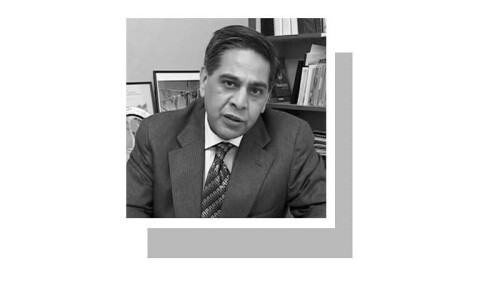
PMA’s Qaiser Sajjad asks govt to upgrade its emergency services across Sindh on priority basis
“On top of that, a lack of accountability at public sector hospitals has brought to a stage that patients are forced to buy basic drugs and surgery equipment from outside the hospital,” Dr Abdullah Muttaqi of the Pakistan Islamic Medical Association said.
He added that the situation demanded that the government explain the need for spending exorbitant amount on costly equipment.
Sharing a similar opinion, Dr Qaiser Sajjad of the Pakistan Medical Association said the limited budget the government had should be first spent on meeting fundamental needs of the people and then on any other thing.
“The need of the hour is that the government should upgrade its emergency services across Sindh and make it available for free,” he said.
The experts questioned that if the robotic systems were too good, why they were not being run at private hospitals in Karachi and stated that such sophisticated systems were not commonly available even in developed countries.
The robotic facility, they said, was already available at a few centres and that should be maintained. One such system purchased for the Sindh Government Qatar Hospital Orangi Town could never be utilised.
The experts alleged that the previous government awarded a tender for procurement of robotic systems to a ‘blue-eyed company’ and had planned to purchase the systems at a higher than market price.
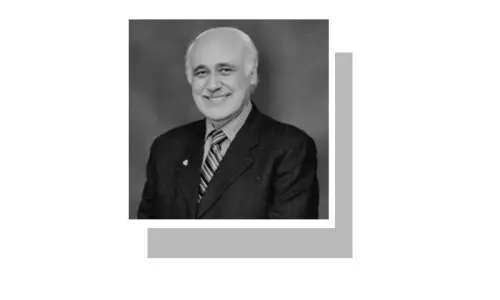
“We will seek the intervention of the Federal Investigative Agency and the court to investigate the matter,” Dr Akram Sultan said.
He also condemned the remarks by the caretaker chief minister who had made serious allegations against the health minister.
On Thursday, the chief minister had stated that the budget for the robotic systems was approved by the last government and that the caretaker government was not authorised to end or stop any projects approved by the previous assembly and the government.
Published in Dawn, November 11th, 2023