Rooftops of world caving, says UN chief in desperate plea for climate action


 0
0


KATHMANDU: Nepal’s snow-capped mountains have lost close to one-third of their ice, UN Secretary-General Antonio Guterres said on Monday and urged the world to “stop the madness” of climate change.
“The rooftops of the world are caving in,” Guterres said on a visit to the Everest region in mountainous Nepal, struggling from rapidly melting glaciers to witness the devastating impact of the phenomenon.
“Glaciers are icy reservoirs — the ones here in the Himalayas supply fresh water to well over a billion people,” he said. “When they shrink, so do river flows.”
Glaciers in Nepal wedged between two major carbon polluters — India and China — melted 65 per cent faster in the last decade than in the previous one, the UN chief said in a video message after visiting the Solukhumbu region during his four-day trip to Nepal.
Says Nepal’s glaciers melted 65pc faster in last decade
Glaciers in the wider Himalayan and Hindu Kush ranges are a crucial water source for around 240 million people in the mountainous regions, as well as for another 1.65 billion people in the South Asian and Southeast Asian river valleys below.
Scientists say they are melting faster than ever before due to climate change, exposing communities to unpredictable and costly disasters.
“I am here today to cry out from the rooftop of the world: stop the madness”, Guterres said, speaking from Syangboche village, with the icy peak of the world’s highest mountain Everest towering behind him.
“The glaciers are retreating, but we cannot. We must end the fossil fuel age,” he said.
“We must act now to protect people on the frontline and to limit global temperature rise to 1.5 degrees to avert the worst of climate chaos,” Guterres said.
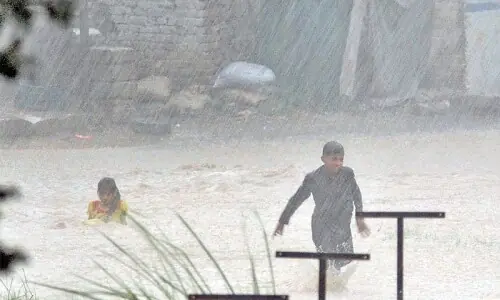
“Melting glaciers mean swollen lakes and rivers flooding, sweeping away entire communities”, he added.
But all too soon, glaciers will dry up if change is not made, he warned.
“In the future, major Himalayan rivers like the Indus, the Ganges and Brahmaputra could have massively reduced flows,” he said.
Climate scientists say the earth’s temperature has increased by an average of 0.74 degrees Celsius over the past 100 years, but warming across South Asia’s Himalayas has been greater than the global averages.
Published in Dawn, October 31st, 2023