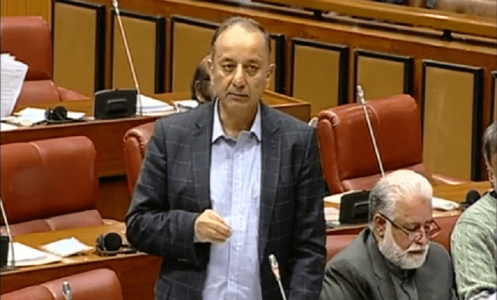
ISLAMABAD: The recent surge in gas prices would be instrumental in curbing the gas sector’s circular debt, which has swelled to Rs2,100 billion, Caretaker Energy Minister Muhammad Ali said on Thursday but painted a bleak picture for the coming winter, with gas supply duration limited to just eight hours a day.
Briefing the media, Mr Ali said that the current circular debt for the entire energy sector was Rs4,500bn without interest payments and it included Rs2,300bn in the electricity sector.
“There will not be a resurgence of the circular debt in the gas sector after the recent increase in gas prices,” he said, adding that the government was working to avoid the addition of further circular debt in the power sector under a commitment with the International Monetary Fund.
As for the recent gas price hike, the caretaker minister said there had been no price change during the first half (July to December 2022) of the previous fiscal year.
He said the prices did increase in the second half (January to June this year), but the rise did not cover the required RLNG (re-gasified liquefied natural gas) diverted to domestic consumers during winter.
Minister hopes hike in gas prices will help rein in circular debt
Elaborating on the upcoming gas supply scenario, Mr Ali indicated a limited supply duration of just eight hours daily despite price hikes. Given the impending gas shortfall, he advised consumers to transition to LPG, adding that the piped gas supply would be in morning, afternoon and evening intervals.
Besides, a ban on new gas connections would continue, the minister said, citing the lack of surplus gas for new consumers.
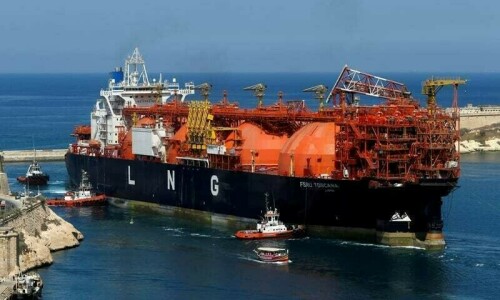
The government had arranged two LNG cargoes for December to minimise the winter gas crisis, he said, adding that the government would also book two cargoes for January.
He recalled that gas prices were last increased in January 2023, which was the first hike in two and a half years. Therefore, the slow pace of price hikes led to the addition of Rs461bn circular debt only in the previous fiscal year, he said.
Mr Ali said that the gas sector was on the verge of collapse as the exploration and production (E&P) companies were leaving the country due to financial risks, and the situation was aggravated due to the federal government’s fiscal constraints impeding exploration activities and even gas imports.
Pointing out the limited reach of piped gas, he said it was only benefiting 30pc of the nation’s households, whereas the majority had to use LPG in urban areas or biomass, wood and cow dung in rural areas.
Besides, around 57 per cent of the domestic gas connections fell in the protected category where there could be no increase in gas prices, he said. This category of consumers used 31pc of the total gas supplied in the country, he said.
“As a matter of fact, this country cannot afford to supply a scarce natural resource like gas at throwaway prices, where the monthly bill of the protected class does not exceed Rs900,” he said.
The minister also defended the increase in the fixed gas charges but insisted the maximum bill for protected consumers would be Rs1,300 per month after the government increased fixed charges from Rs10 to Rs400.
He also mentioned that the government had not increased gas prices for tandoors because roti was among the necessities.
The minister also highlighted the rationalised industry tariffs between the country’s north and south regions.
He said that while gas for the industry in Punjab was charged at the full RLNG cost, at around $12.5 per million British thermal units (mmBtu), the industry in Sindh paid almost one-third of it.
Published in Dawn, October 27th, 2023