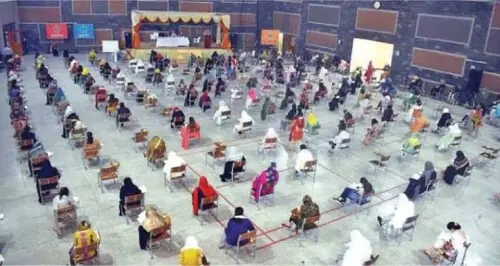
HYDERABAD: Health professionals have underscored the importance of early diagnosis in prevention and management of breast cancer and urged people, especially women, to actively disseminate awareness about the disease as early detection could save lives.
They said Pakistan witnessed 90,000 new breast cancer cases annually, but it had a survival rate of over 98pc when diagnosed in early stages, making late diagnosis the primary cause of high mortality. They were speaking at a breast cancer awareness seminar organised by the Institute of Gender Studies, Sindh University.
IGS Director Prof Dr Misbah Bibi Qureshi said that potential reduction was witnessed in breast cancer incidence through heightened public awareness and early detection. She reiterated IGS’s commitment to awareness thro-ugh seminars and social media initiatives.
She called for comprehensive support for the women facing breast cancer, including provision of free medications, and advocated joint efforts to educate them on preventive measures and access to free medical camps. She expressed concern on the rising cases in the neighboring countries, projecting an upward trend based on demographic shifts. She said that early-stage identification significantly led to reduction in illness and mortality.
She said mammographic screening was influenced by a range of socio-cultural and economic factors, but women often sought medical attention at advanced stages due to multiple socio-economic and cultural factors, including age, employment status, limited awareness, fear of surgery and reliance on traditional treatments and spiritual healing.
Research Innovation & Commercialisation (ORIC) of Liaquat Medical University of Medical & Health Sciences (LUMHS) Director Dr Binafsha Manzoor Syed urged women to conduct regular self-examinations. She said 89pc of breast cancer patients were diagnosed at later stages with 59pc at advanced stages due to a lack of awareness.
She cited fear of stigmatisation and feminine sensitivity as barriers to early detection and treatment in low and middle income countries, discussing physical barriers leading to psychosocial stress and reluctance for screening and treatment.
Dr Sadat Memon, an assistant professor in the department of pharmacology, LUMHS, said one among eight women in Pakistan developed breast cancer in life and many succumbed to it each year due to the lack of awareness. She said that regular breast examinations not only among elderly women but also among younger individuals was essential. She advised women to undergo a mammogram and physical examination by a doctor at least every two years, dispelling misconceptions about the side effects of chemotherapy.
A senior lecturer of LUMHS, Dr Shamshad Memon, observed that early-stage breast cancer typically presented with no symptoms and screening mammograms played a pivotal role in the early detection.
Published in Dawn, October 18th, 2023