Nobel Chemistry prize awarded for discovery of quantum dots used in LED lights



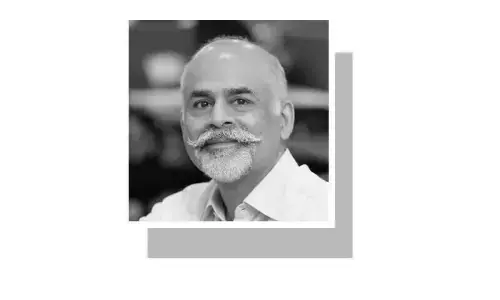
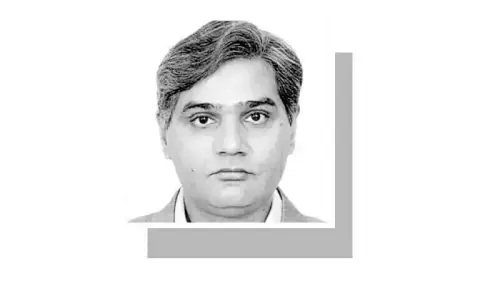
Scientists Moungi Bawendi, Louis Brus and Alexei Ekimov won the 2023 Nobel Prize in Chemistry for “the discovery and synthesis of quantum dots”, which illuminate computer monitors and television screens and are used by doctors to map tumours.
“The Nobel Laureates … have succeeded in producing particles so small that their properties are determined by quantum phenomena. The particles, which are called quantum dots, are now of great importance in nanotechnology,” the Nobel Committee for Chemistry said in a statement.
“Researchers believe that in the future they could contribute to flexible electronics, tiny sensors, thinner solar cells and encrypted quantum communication.”
Nanoparticles and quantum dots are used in LED lights and can also be used to guide surgeons while removing cancer tissue.
The more than century-old prize is awarded by the Royal Swedish Academy of Sciences and is worth 11 million Swedish crowns ($997,959).
Earlier on Wednesday, the academy appeared to have inadvertently published the names of the three scientists it said had won this year’s Nobel Prize in chemistry.
Bawendi is a professor at the Massachusetts Institute of Technology (MIT), Brus is a professor emeritus at Columbia University and Ekimov works for Nanocrystals Technology Inc.
Brus was hired by AT&T Bell Labs in 1972 where he spent 23 years, devoting much of the time to studying nanocrystals.
Bawendi was born in Paris and grew up in France, Tunisia, and the U.S. Bawendi did his postdoctoral research under Brus then joined MIT in 1990 and became a professor in 1996.
Ekimov was born in the Soviet Union and worked for the Vavilov State Optical Institute before moving to the United States. In 1999, Ekimov was named chief scientist at Nanocrystals Technology Inc.
The third of this year’s crop of awards, the chemistry Nobel follows those for medicine and physics announced earlier this week.
Established in the will of Swedish dynamite inventor and chemist Alfred Nobel, the prizes for achievements in science, literature and peace have been awarded since 1901 with a few interruptions, primarily due to the world wars. The economics prize is a later addition funded by the Swedish central bank.
While the chemistry awards are sometimes overshadowed by the physics prize and its famous winners such as Albert Einstein, chemistry laureates include many scientific greats, including radioactivity pioneer Ernest Rutherford and Marie Curie, who also won the physics prize.
Last year’s chemistry award went to scientists Carolyn Bertozzi, Morten Meldal and Barry Sharpless for pioneering work in “click chemistry”, discovering reactions that let molecules snap together to create new compounds.