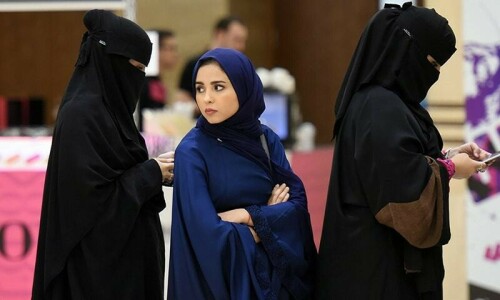
A group of sports federations from Muslim-majority countries said on Monday that France’s move to bar its Olympic athletes from wearing the hijab would “send a message of exclusion”.
The 57-member Islamic Solidarity Sports Federation (ISSF), based in the Saudi capital Riyadh, voiced “profound concern” over the French decision, which was taken in line with the country’s strict rules on secularism.
French Sports Minister Amelie Oudea-Castera said last month the French government was opposed to any display of religious symbols during sporting events.
“What does that mean? That means a ban on any type of proselytising. That means absolute neutrality in public services,” she told France 3 television.
“The France team will not wear the headscarf.”
The ISSF said in its statement on Monday that the hijab was “an aspect of many Muslim women’s identity and should be respected”, adding that the French ban could prevent some French Muslim athletes from competing.
“The Olympics have historically celebrated diversity, unity and athletic excellence,” the statement said.
“By implementing a hijab ban for their athletes, a host would send a message of exclusion, intolerance and discrimination that goes against the Olympic spirit.”
The statement urged French authorities “to reconsider this ban” and called for “meaningful engagement with the Muslim sports community in France.”
The ISSF was founded in 1985 to serve members of the Organisation of Islamic Cooperation, based in the Saudi city of Jeddah, “in all aspects of sports activities”, according to its website.
It has organised five editions of the Islamic Solidarity Games, most recently last year in Turkiye.
The UN human rights office has not addressed France’s hijab ban for its athletes directly, but a spokeswoman said last week that “no one should impose on a woman what she needs to wear or not wear.”