GORIS: Thousands of refugees from Nagorno-Karabakh streamed into Armenia Monday as a deadly blast rocked a fuel depot in the rebel enclave and Azerbaijan and ally Turkey hailed Baku’s victory over the majority ethnic Armenian area.
Meanwhile, Russia hit back at embattled Armenian Prime Minister Nikol Pashinyan after he blamed Moscow for the swift defeat of the breakaway territory.
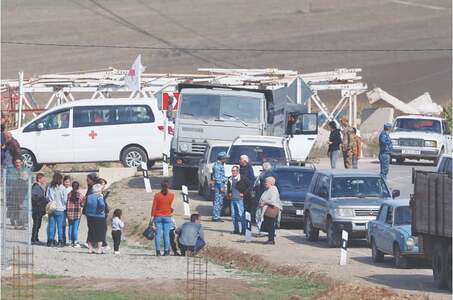
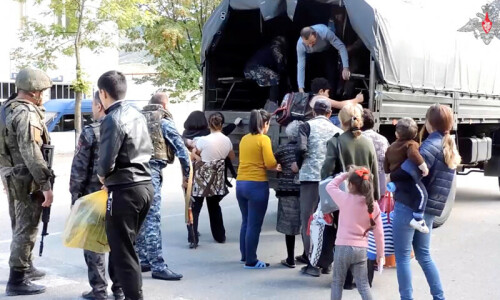
Several days after the fighting, the first refugees arrived in Armenia on Sunday and 6,650 people have so far entered, Yerevan said on Monday.
Reporters saw the refugees crowding into a humanitarian hub set up in a local theatre in the city of Goris to register for transport and housing. “We lived through terrible days,” said Anabel Ghulasyan, 41, from the village of Rev, known as Shalva in Azeri.
Over 200 injured in fuel depot explosion
She arrived in Goris with her family by minibus, carrying her belongings in bags.
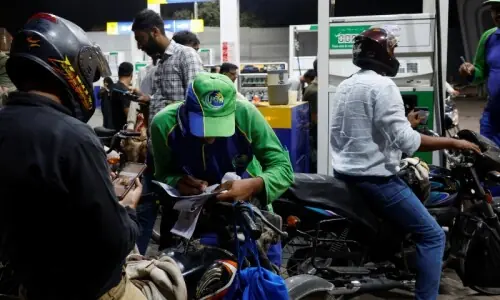
An explosion at a fuel depot wounded more than 200 people, according to Armenian separatist authorities which have been supplying those seeking to leave the territory with petrol and diesel.
“As a result of the explosion in the fuel warehouse, the number of injured exceeds 200. The health condition of the majority is severe or extremely severe,” the region’s rights ombudsman Gegham Stepanyan said on social media.
“The medical capacities of (Nagorno-Karabakh) are not enough,” he added, calling for air ambulances to be allowed to land.
An official had earlier indicated there were fatalities without giving a toll.
Armenia and Azerbaijan have fought two wars in the last three decades over Nagorno-Karabakh, a majority ethnic Armenian enclave within the internationally recognised border of Azerbaijan.
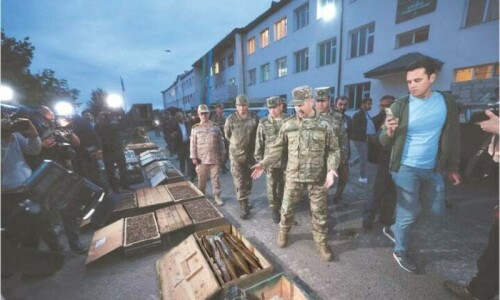
Azerbaijan launched a lightning operation on September 19 to seize control of the territory, forcing the separatists to lay down their arms under the terms of a ceasefire agreed the following day.
It followed a nine-month blockade of the region by Baku that caused shortages of key supplies.
The separatists have said 200 people were killed in last week’s fighting. Baku announced two of its soldiers also died when a mine hit their vehicle on Sunday.
Azerbaijan’s state media said officials held a second round of peace talks with Nagorno-Karabakh’s ethnic Armenian community aimed at “reintegrating” them.
But on the road heading to Armenia, more and more residents from the region appeared to be trying to get out as the witnesses said cars were snarling up in traffic.
At the refugee centre in Goris, Valentina Asryan, a 54-year-old from the village of Vank who fled with her grandchildren, said her brother-in-law was killed and several other people were injured by Azerbaijani fire.
“Who would have thought that the ‘Turks’ would come to this historic Armenian village? It’s incredible,” she said, referring to the Azerbaijani forces.
Published in Dawn, September 26th, 2023