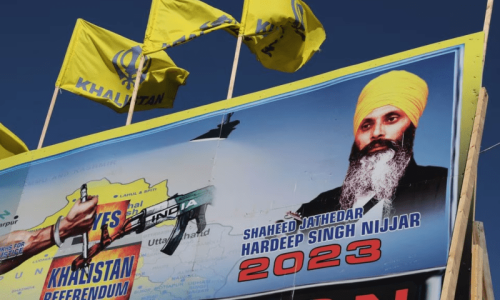
A SPAT between Canada and India over the murder of a pro-freedom Sikh activist in a Vancouver suburb has turned ugly, with both states expelling diplomats and exchanging accusatory rhetoric.
Hardeep Singh Nijjar, a Canadian citizen and prominent advocate for Khalistan, was killed outside a gurdwara he headed in June.
In a startling disclosure, Canadian Prime Minister Justin Trudeau told his country’s parliament the authorities were “pursuing credible allegations” that Indian “agents” were linked to the murder. In a related move, Ottawa expelled a diplomat described as India’s top intelligence agent in the country.
Meanwhile, New Delhi on Tuesday asked a Canadian diplomat to leave the country apparently due to involvement in “anti-India activities”, while an Indian foreign ministry spokesman described Mr Trudeau’s claims as “absurd”.
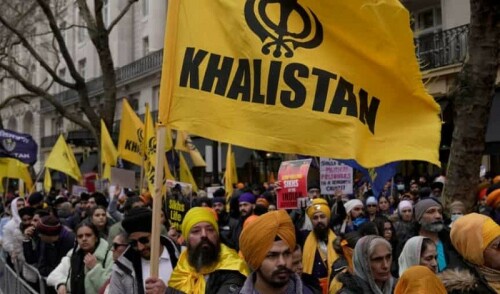
Bilateral ties had steadily been declining over the Khalistan issue, as Canada hosts a large Sikh diaspora, and many Canadian Sikhs support the movement for a separate homeland.
Due to these facts, Mr Trudeau had received a somewhat frosty reception during the G20 moot in New Delhi earlier this month, compared to the warm welcome other foreign leaders received. With public allegations, things have come to a head.
Assassinations by states on foreign soil of elements they consider undesirable is part and parcel of international espionage. But perhaps Israel takes the cake where subterfuge is concerned.
Tel Aviv’s agents have for decades been taking out targets across the globe. Most of the victims have been Palestinian militants and activists, while lately members of Hezbollah and those linked to Iran’s nuclear programme and security institutions have topped the list.
Considering the cosy relationship between New Delhi and Tel Aviv, perhaps the Indians have taken a page out of Mossad’s handbook in organising the hit on an individual they considered a ‘terrorist’. Other states, too, indulge in such activities.
However, despite India’s posturing, this issue is unlikely to fizzle out, as the Canadian PM would not have made such a major announcement without strong proof.
Along with assuring a large ethno-religious community that their safety matters, Canada will also pursue this murder to protect its reputation as a state where the rule of law is respected, as Mr Trudeau noted.
States may indulge in such underhanded behaviour, but the blowback can be embarrassing if things go awry, as the Indian government is discovering.
Published in Dawn, September 20th, 2023