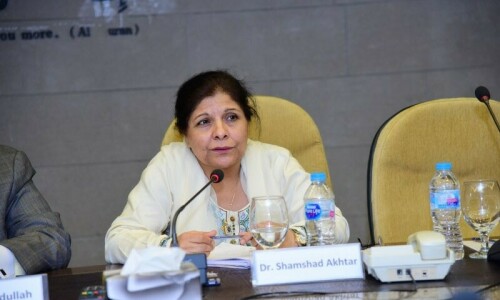
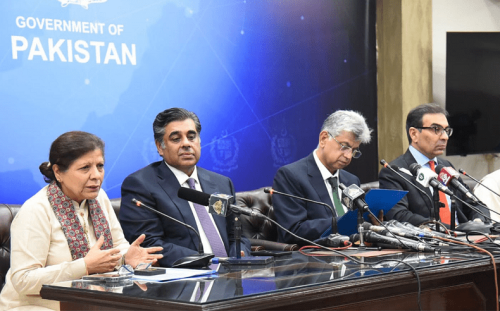
ISLAMABAD: Finance Minister Shamshad Akhtar has directed the Federal Board of Revenue (FBR) to prepare a proposal for revamping the tax system and increasing the tax-to-GDP ratio, which has remained stagnant for years, Dawn has learnt from official sources.
The FBR officials, however, have expressed reservations about the feasibility and impact of the proposed restructuring plan and have suggested that policy reforms are more effective in achieving the revenue goals.
According to Dr Akhtar, the tax-GDP ratio in Pakistan has been stuck at around 9pc for decades, which is much lower than that of India. India has a tax-to-GDP ratio of 17pc, with 11pc coming from the central government and 6pc from the states.
The government has projected a revenue collection target of Rs9.415tr for FY24 as against the revised collection of Rs7.2tr in FY23, showing an increase of Rs2.219tr or 30pc.
According to the FBR sources, the proposed plan will suggest measures to enhance tax compliance, plug loopholes in the tax system and curb the smuggling of goods that erode the government revenue.
The province of Balochistan has only 500 customs enforcement personnel, ranging from sepoys to superintendents, to tackle smuggling. The other provinces also face a similar challenge and need a more effective enforcement force to curb smuggling. “The restructuring plan to focus on such issues”, the sources further said. The sources said that the low tax-to-GDP ratio is due to the lack of policy interventions by the government. They added that the FBR is missing out on Rs1 trillion in revenue due to zero sales tax on petrol sales.
The government is collecting petroleum development levy (PDL) on petroleum products instead of GST, which would increase the tax to GDP ratio. The FBR collects PDL for the federal government, but it does not reflect in the performance of the tax machinery.
The services and agriculture income sectors, which have high revenue potential, are under the jurisdiction of the provinces. The services industry has grown in GDP, but its tax contribution is minimal. The agriculture incomes have also increased significantly in the past few years, but the provinces are not collecting agriculture income tax. Sources said that the new plan will urge the federal government to address this issue with the provinces to stop the revenue loss.
The provinces had promised to raise the tax-to-GDP ratio to 15pc when the devolution plan was implemented. However, their tax contribution is only around 1pc, which falls far short of their commitment and potential.
The FBR has stopped selecting cases for audit through random computer balloting since September 2020. The last electronic balloting was done on September 18, 2020. This is one area where proper proposals will be made to improve it. Currently, tax officials are issuing tax notices to individual taxpayers, which have reportedly led to harassment of taxpayers and very low tax recovery compared to the initial demands.
Published in Dawn, September 12th, 2023