ISLAMABAD: As many as four environmental samples, collected from Karachi and Peshawar, have tested positive for the poliovirus.
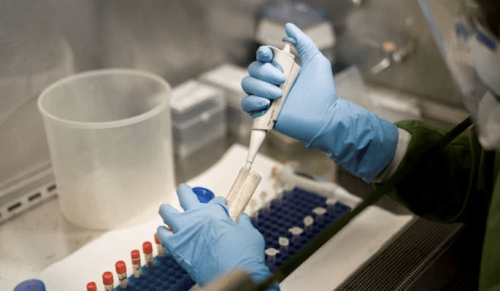
According to sources at Pakistan’s National Polio Laboratory at the National Institute of Health (NIH), the lab has confirmed the detection of Type-1 Wild Poliovirus (WPV1) in four environmental (sewage) samples from Karachi and Peshawar.
“As many as three samples were collected from Peshawar, and one sample was collected from District Karachi in the Keamari area,” an official said, requesting not to be named.
He noted that Karachi’s first detection of wild poliovirus in 2023 was confirmed in June this year in an environmental sample from Sohrab Goth. Earlier, positive sample in Karachi was detected in August 2022 from Landhi, district Malir, he said.
He said that if the poliovirus was found in sewage water, the sample was called ‘positive’.
“Samples of sewage water from the area are a basic parameter to determine the success of polio campaigns. Moreover, the presence of the virus in sewage also shows that the immunity level of children in the area has fallen, and they are at risk of catching the disease,” he said.
“The Pakistan Polio Programme is already testing for the poliovirus at 114 fixed environmental sites in the country every month. To further enhance surveillance in high-risk areas, it has also been collecting additional sewage samples from multiple sites periodically. Moreover, we are also testing environmental samples collected from Afghanistan and Yemen,” the official said.
It is worth mentioning that Karachi, among the most populous cities in the world and home to communities from across Pakistan, is a historic polio reservoir and remains among the areas categorised by the programme at high risk for wild poliovirus transmission.
Polio is a highly infectious and incurable disease caused by the poliovirus, which primarily affects children under the age of five. The virus invades the nervous system and can lead to paralysis or even death in some cases.
There is no cure for polio; repeated vaccination is the most effective way to protect children. The polio vaccine has shielded millions of children from polio, enabling nearly all countries in the world to achieve polio-free status. Pakistan and Afghanistan are the only two remaining endemic countries in the world.
Published in Dawn, September 7th, 2023