0
0

PARIS: A recent claim by South Korean researchers that they have created a material which works as a superconductor at room temperature — long a holy grail of physics — has been met with huge excitement on social media. but scepticism from scientists.
Superconductors can carry electrical currents with zero resistance, unlike traditional materials such as copper which lose part of the charge as heat.
Since the phenomenon was discovered in 1911, thousands of superconducting materials have been found — but to work, all have to be kept at extremely cold temperatures and high pressure, limiting their real-world applications.
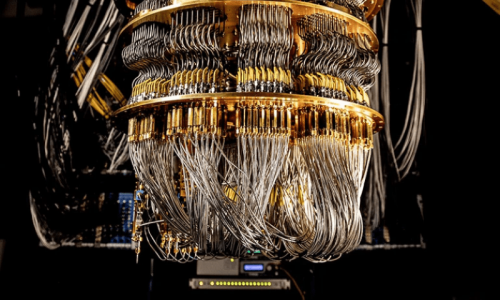
So the race is on to find a material that superconducts at room temperature, which could lead to transformational technology that could help fight climate change, supercharge quantum computing and even boost levitating high-speed trains.
Late last month, a little-known group of South Korean physicists posted a preprint study — which has not been peer-reviewed — announcing that their material, called LK-99, can superconduct at room temperatures and ambient pressure. They also posted a video of a small piece of the material levitating above a magnet as evidence of the feat.
The news was soon trending on Twitter, driven largely by fevered speculation among amateurs, while scientists around the world rushed to create the material and test whether it was the real deal.
Large laboratories in China and India were the first to report their findings, both determining the material could not superconduct at room temperature.
But that does not yet rule out successful replications in the future.
Several preprints looking at the theoretical side have suggested that LK-99 could at least be capable of the long-sought feat.
`Trial by Twitter’
In the midst of the social media hype — a rarity in the often dry world of materials science — experts in the field have called for patience.
Susannah Speller, a researcher at Oxford University who has worked on superconducting materials for more than 20 years, said “trial by Twitter is not going to replace the standard scientific process for checking and verifying work”.
If the scientific community has come across as a bit negative, it is because “we’ve been trained to be sceptical _ and we’ve seen this all before,” Speller said.
Julien Bobroff, a physicist at France’s Paris-Saclay University, said “we have been hearing announcements about superconductors coming in from the cold for the last 30 to 40 years, and most have turned out to be wrong”.
Indeed, late last year the prestigious Nature journal retracted a 2020 study claiming that a material conducted electricity without resistance at 15 degrees Celsius.
So why has the reaction been so different this time around? Both Speller and Bobroff pointed to the video posted by the South Korean researchers, which offered a visual element that created a wow-factor on social media timelines.
However, Speller said “there are lots of things that can levitate that are not superconductors — it’s not a test for superconductivity.”
Published in Dawn, August 10th, 2023