ONE of the major irritants standing in the way of improved Pakistan-Iran relations is the presence of armed malign actors active along the common border of both states. These include criminals such as drug smugglers, as well as armed militants subscribing to both separatist and extremist ideologies.
Deadly confrontations between these elements and security forces are common, which often result in the loss of both Pakistani and Iranian personnel.
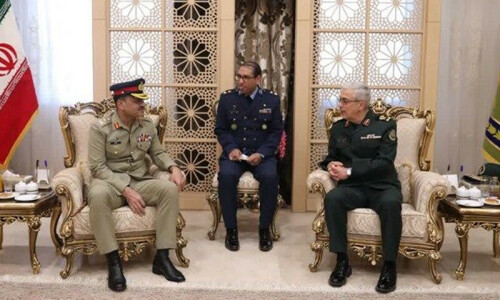
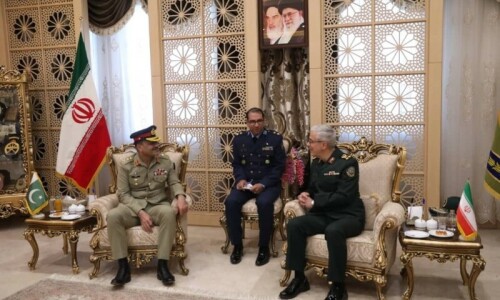
Therefore, it is understandable why border security was a dominant theme during army chief Gen Asim Munir’s recently concluded visit to Iran. The COAS met the Iranian president and foreign minister, as well as Tehran’s top generals representing both the regular army as well as the Pasdaran.
As per an ISPR statement, both sides “vowed to eradicate the menace of terrorism” along the common border by sharing intelligence and enhancing cooperation. This is the second high-level exchange between the leaderships of both states in recent months, as Prime Minister Shehbaz Sharif and President Ebrahim Raisi met in May to inaugurate the Mand-Pishin ‘border sustenance market’.
Mr Raisi again reiterated the need for “safe economic borders” during his meeting with the COAS. However, whenever there are such top-level exchanges, spoilers are never far behind.
For example, following the Sharif-Raisi meeting Iran lost a number of security men in a terrorist attack in Saravan near the Pakistani border, while in April at least four Pakistani personnel were martyred in Kech in an attack by terrorists apparently operating from Iran.
The best way to monitor the border area and prevent terrorist and criminal violence is for both militaries and foreign ministries to liaise closely, as was promised in Tehran during the army chief’s visit.
Through intelligence sharing and better coordination the security situation in the border areas can improve, so that malign actors are not able to use either country’s soil to harm the other.
Militant groups and actors supported by hostile states will continue to try and vitiate the atmosphere, which is why the leaderships of both states must redouble their efforts to pacify the border region.
Alongside improving the security situation, promoting economic activity will also be beneficial for the underdeveloped parts of both Sistan-Baluchestan and Balochistan.
Through increased trade and people-to-people contacts, Pakistan-Iran relations can be deepened, provided that both states jointly tackle the problem of terrorism and violent crime.
Published in Dawn, July 18th, 2023