NEW DELHI: Days of intense monsoon rains across northern India have left at least 29 people dead, rendering many areas inaccessible with bridges smashed and roads blocked, officials said on Monday.
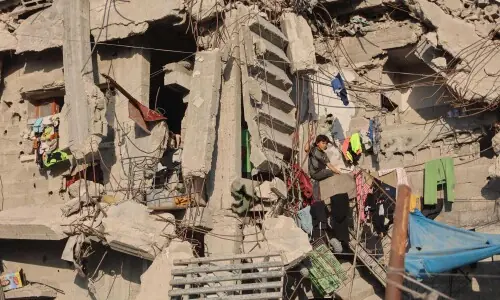
Television footage showed flash floods and landslides triggered by torrential rain, washing away vehicles, demolishing buildings and ripping down bridges in the hilly state of Himachal Pradesh, the worst affected area.
“In the last two days, the death toll due to monsoon rains has risen to 20 in Himachal Pradesh,” said Omkar Sharma, a senior official heading disaster management in the state.
Nine more deaths were reported in Rajasthan, Uttar Pradesh and the Himalayan regions of Uttarakhand and Kashmir, taking the toll of those killed since Saturday from a previously reported 15 to at least 29.
300 people stranded in Himachal Pradesh
Himachal Pradesh Chief Minister Sukhvinder Singh Sukhu expressed “deep sorrow” at the deaths and said the government was “making all-out efforts” to tackle the situation, with more rain predicted.
Authorities were waiting for a break in the rains to send helicopter missions to rescue about 300 stranded people — including tourists — in Himachal Pradesh’s areas of Lahaul-Spiti and Kullu.
India’s meteorological department has forecast more rain across large parts of the country’s north in the coming days.
Schools in New Delhi were shut on Monday after receiving the most rain in a single day in July in four decades, and the capital was on high alert as the Yamuna river was flowing close to danger levels, with many roads swamped.
Streets and neighbourhoods in Punjab state were also filled with knee-deep rainwater.
Official data shows monsoon rains across the country in the first week of July have already produced about two percent more rainfall than normal.
The summer monsoon brings South Asia around 80 per cent of its annual rainfall, as well as death and destruction due to flooding and landslides.
The rainfall is hard to forecast and varies considerably, but scientists say climate change is making the monsoon stronger and more erratic.
Published in Dawn, July 11th, 2023