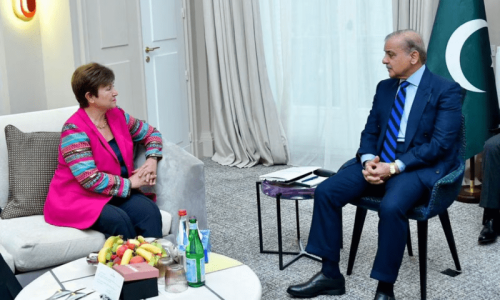
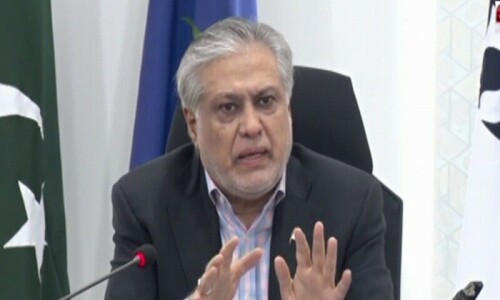
The International Monetary Fund (IMF) and Pakistan have struck a staff-level agreement for the provision on $3 billion in bailout funds under a stand-by arrangement (SBA).
The deal comes under an SBA instead of the country’s Extended Fund Facility (EFF) programme that Pakistan entered in 2019 and which was set to expire on Friday (today). The IMF said the SBA “builds on” efforts under the EFF.
The IMF board will meet in mid-July to approve the staff-level agreement.
Here are some key facts about the agreement:
Challenging reforms
-
The power sector has been specifically mentioned by the IMF, which called for a “timely” rebasing of tariffs to ensure that costs are recovered. This means hiking prices for consumers despite already record-high inflation in what is an election year.
-
The State Bank of Pakistan (SBP) should withdraw import restrictions put in place to control external payments in the face of fast-depleting foreign exchange reserves, which had throttled economic growth. Reserves stand at $3.5bn — barely enough to cover a month’s worth of controlled imports.
-
Pakistan has been asked to commit fully to a market-determined exchange rate, remove controls and eliminate multiple exchange rate practices in different markets, even as the rupee has depreciated to record lows in recent weeks.
-
The SBP has also been asked to remain “proactive” to reduce inflation. The bank paused its rate hike process at a scheduled meeting this month. Days later, it implemented an off-cycle 100 basis point hike to take its policy rate to 22 per cent on the demand of the IMF.
-
Losses in state-owned enterprises, which are burning a hole in government finances, will need stronger governance. The government has budgeted only about Rs15bn in receipts from a stalled privatisation process.
More funding
- Despite the larger-than-expected IMF bailout, the agreement stressed that Pakistan will have to continue to mobilise multilateral and bilateral financial support.
-
Saudi Arabia and the United Arab Emirates have pledged a combined $3bn that is expected to come in now that the IMF deal has materialised. Debt rollovers from China, the country’s largest creditor, will also be key.
-
Ensuring the materialisation and building of a spending framework for pledges secured earlier this year in an international donor conference will be key. Over $9bn in climate-related pledges were made to help Pakistan recover from devastating floods in 2022.
-
Pakistan needs $22bn to fund its external payment obligations, including international debt servicing, in the financial year 2024 — which starts on July 1 and ends on June 30, 2024.
Staying the course
-
The IMF has stressed that it is important that the revised annual budget is executed as planned, and the authorities resist pressures for unbudgeted spending or tax exemptions in the period ahead.
-
The agreement states that the full and timely implementation of the programme will be critical for its success in light of the difficult challenges.
-
The fund has called on Pakistan for “steadfast policy implementation” and “fiscal discipline” to overcome its current challenges, which include record high inflation, a gaping fiscal deficit and building up low reserves.