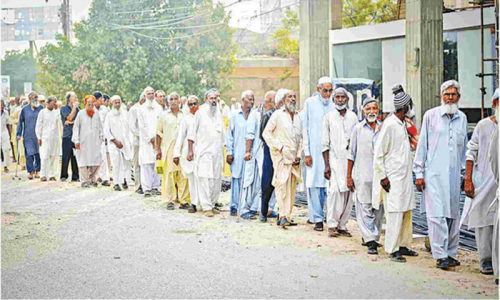
The federal government has finally started implementing — although in piecemeal manner — the long-awaited pension reforms as Pakistan’s pension liabilities spike by a hefty 44.4pc from the original estimate of Rs520bn for the present year to Rs751bn for next year.
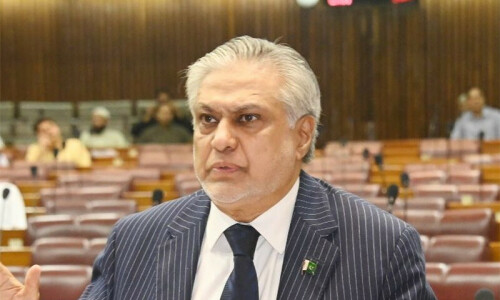
Winding up the debate on Budget 2023-24, Ishaq Dar announced the elimination of multiple pensions being drawn by government officials in Grade 17 and above as part of reforms aimed at reducing the burden of this unfunded liability on the public exchequer.
The measure will ensure that an official who is re-employed by the government after retirement from the service receives only one pension.
Further, when calculating the amount, the ad hoc pension allowance will be included as part of the net pension without compounding. The pensioners will opt for the highest amount. Besides, it will be available to dependents for 10 years after the death of the pensioner and their spouse.
This is a good beginning. But the finance minister should have announced deeper reforms to control this fast-growing expenditure, using the present financial crisis as an opportunity to implement difficult measures.
The government’s annual pension bill — surging each year because of the increasing number of pensioners, rising pensions and lack of contribution from employees — is emerging as a major threat to Pakistan’s fiscal sustainability.
As evident from the projected increases, it will become completely unsustainable in the next few years.
Of more concern is the military pension whose volume is estimated to surge from Rs395bn this year to Rs563bn — or almost three quarters of the total federal pension expenditure — next year owing to the rapid rise in the number of pensioners because of early retirements, compared to the civil pension expense of Rs188bn.
Since pensions are paid through the budget, the fast increase in this liability has to be financed either through new borrowings, or cuts in other expenditures such as development funds.
With the rest of the world moving on from this unfunded budgetary pension model to ‘contributory schemes’ and pension funds, it is high time Pakistan also made strides in this direction to control this ever-growing national liability.
Khyber Pakhtunkhwa has in recent years taken steps to fix its huge unfunded pension liability. The centre could learn from its experience to fix its own if it has the political will for that.
Published in Dawn, June 29th, 2023