Bill recommending up to 6 months jail, Rs1m fine for contempt of parliament sails through NA


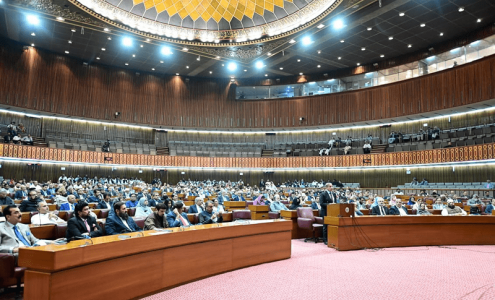
The National Assembly (NA) passed on Tuesday the Contempt of Majlis-e-Shoora (Parliament) Bill, 2023 — which envisions up to six months imprisonment or Rs1m fine or both for individuals found guilty of insulting the parliament.
The bill, presented by PTI dissident lawmaker Rana Muhammad Qasim Noon, was approved by a majority vote, according to the National Assembly of Pakistan’s official Twitter account.
The bill will now be sent to the Senate for approval.

According to state-run APP, Minister for Federal Education and Professional Training Rana Tanveer Hussain appreciated the bill and said that it would help improve parliament’s “oversight role”.
After the passage of the bill, the mover, Noon, said it was a historic moment in the country’s parliamentary history. “It will ensure the supremacy of parliament, which is the mother of all institutions,” he said, adding that such legislation existed in the four provinces but not at the federal level.
Rana Qasim Noon said that it would be contempt to breach the privilege of parliament and those involved in such acts could be punished.
On May 9, the government allowed the introduction of the crucial private member’s bill in the National Assembly. It had garnered the support of almost all the parties present in the National Assembly and the lawmakers termed the move too late, saying that such a law should have been enforced much earlier.
How does it work?
The bill outlines the process for charging individuals with contempt of the House and establishes a Contempt Committee to address such cases.
The speaker or chairman of the Senate can refer matters of contempt to the committee.
The Contempt Committee has the authority to conduct quasi-judicial proceedings, enforce attendance, and compel the production of documents.
The chairman of the committee can issue summons to individuals to appear before the committee and provide evidence or produce relevant documents. If a person fails to comply with the summons, the chairman may issue a warrant for their appearance, with the approval of the speaker or chairman Senate.
In cases where the production of documents or giving evidence involves government entities, the administrative heads can decline disclosure if it poses a threat to defence, security, external relations, or public interest.
If found guilty of contempt, individuals can face punishments such as imprisonment for up to six months, a fine of up to one million rupees, or both. Judicial magistrates will execute and enforce the decisions of the House, and appeals against these decisions can be filed before the joint sitting within 30 days.
The joint sitting may refer the appeal to the Committee of Joint Sitting, which will provide a final report within thirty days. All proceedings before the committee are deemed quasi-judicial, and the evidence and documents produced before the committee are not admissible in court. Individuals giving evidence or producing documents before the committee are exempt from civil, criminal, or departmental proceedings.
The bill also emphasises the importance of loyalty to the state and parliamentary oversight, and it aims to address the issue of individuals refusing to appear before committees despite notices. Entry 42 of the federal Legislative List empowers the Majlis-e-Shoora (Parliament) to make laws for punishing those who refuse to provide evidence or produce documents before a committee when required to do so by the committee chairman.