Constitutional abyss

“The framers had inserted Article 184(3) intending that the jurisdiction shall be exercised to ensure that the fundamental rights of the weak, vulnerable and marginalised classes are protected.” — Justice Athar Minallah
AS the black comedy of celebrating the 50th anniversary of our Constitution in the midst of a constitutional crisis continues, it seems that the document is all about resolving the conflicts for political power among the political elite.
I want to remind all of us of our constitutional fundamental rights and the directive principles upon which all public policies are supposed to be based in Pakistan, and how miserably we have addressed them. And how we are not even talking about these foundations upon which the constitutional edifice is built.
Hats off to the statesmanship of those politicians, who despite their huge political differences, agreed to a new constitution in 1973. Political dialogue was the key, which we see no more today. As the majority party in the house, PPP had given a vision of an egalitarian society in its manifesto during the 1970 election campaign.
Hence, the preamble of the Constitution says: “Inspired by the resolve to protect our national and political unity and solidarity by creating an egalitarian society through a new order; [we the people of Pakistan] do hereby, through our representatives in the National Assembly, adopt, enact and give to ourselves, this Constitution.”
Earlier, the preamble says, “…[I]t is the will of the people of Pakistan to establish an order … wherein the principles of democracy, freedom, equality, tolerance and social justice, as enunciated in Islam, shall be fully observed.”
In today’s Pakistan, ‘fundamental rights’ and ‘principles of policy’ sound so alien.
Part II of the Constitution has two chapters, ‘Fundamental Rights’ and ‘Principles of Policy’. Twenty-one articles — eight to 28 — explicitly enlist our rights. They ensure that the country’s laws will be consistent with these fundamental rights (8); “no person shall be deprived of life and liberty” (9); an arrested person has the right to know the grounds for his/her arrest and has the right to a legal counsel and defence and to a fair trial (10); all forms of slavery and forced labour are prohibited, and “No child below the age of 14 years shall be engaged in any … hazardous employment” (11). Moreover, the Constitution mandates “protection against retrospective punishment” (12); “protection against double punishment and self-incrimination” (13); “inviolability of dignity of man” ie,“No person shall be subjected to torture for the purpose of extracting evidence” (14); the right to move, reside and settle in any part of Pakistan (15); the right to peaceful assembly (16); the right to form associations and unions (17); “freedom of trade, business or profession” (18); the right to freedom of speech, freedom of press and access to information (19); “freedom to profess, practise and propagate his religion” and to “maintain and manage religious institutions” (20); there’s no special taxation on religious grounds (21); no person in any educational institution is required to receive religious education relating to any religion other than his own (22); “the right to acquire, hold and dispose of property in any part of Pakistan” (23); the right to protection of property (24); “all citizens are equal before the law and entitled to equal protection of law” with “no discrimination on the basis of sex” (25). Article 25(A) provides the right to free and compulsory education to all children (five to 16 years); “non-discrimination in respect of access to public places” (26); no citizen can be discriminated against for government service appointment (27); and the right to preserve and promote any distinct language, script or culture (28).
There are many provisos and exceptions attached to these rights. Nevertheless, it is an impressive list of individuals’ rights, freedoms and entitlements — a great statement of a grand vision for strong citizenship and state. The right to health, though, is conspicuous by its absence.
The second chapter deals with the ‘Principles of Policy’ and consists of 11 articles (20 to 40). The coverage is immense: promoting an Islamic way of life; promotion of local government institutions; discouragement of parochial and similar prejudices; full participation of women in national life; protection of family; protection of minorities; promotion of social justice and eradication of social evils; promotion of people’s social and economic well-being; enabling people from all parts of Pakistan to serve in the armed forces; and strengthening relations with the Muslim world and promoting international peace.
These principles of policy are deemed so important in the Constitution that each organ and authority of the state has been given the responsibility of observing them.
And, the president of Pakistan, in the case of federal affairs, and each provincial governor have been obligated to prepare an annual report to be laid before the national and provincial assemblies “on the observance and implementation of the Principles of Policy” (29.3).
How many times have we heard of reports on the observance of the principles of policy being presented and discussed in the national and provincial assemblies by the president and the governors? Has it ever been breaking news? Have our superior courts ever taken suo motu notice on the lack of such annual reports? In today’s Pakistan, these fundamental rights and principles of policy sound so alien.
On the Constitution’s 50th anniversary, a great majority of us, the people of Pakistan, who gave ourselves this Constitution, feel completely left out. We are battling a more than 35 per cent inflation rate and some of us are dying, fighting over a bag of atta. Despite the promise of compulsory and free early education we have one of the highest number of out-of-school children in the world. Forty per cent of our children are stunted and we have one of the highest prevalence of hepatitis C in the world.
The list of our miseries is long and tragic. Why, despite our abysmal and worsening socioeconomic conditions and the state of our civil, political and cultural rights, have we become least relevant in the ongoing constitutional debates and suo motu actions of our superior courts?
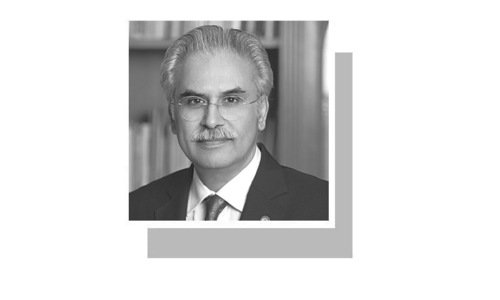
The writer is a former SAPM on health, professor of health systems at Shifa Tameer-i-Millat University and WHO adviser on UHC.
zedefar@gmail.com
Published in Dawn, April 21st, 2023