ISLAMABAD: The Asian Development Bank (ADB) has carried out a study that led to the preparation of a ‘Climate Investment Roadmap’ for Peshawar to address the effects of climate change surrounding the city.
The roadmap has been developed under the technical assistance programme of ADB, aimed at supporting Asian cities in their efforts to ensure an eco-friendly atmosphere.
The Peshawar roadmap has a strategic focus on Green House Gas (GHG) reduction and resilience featuring measures that would improve the quality of life for those residing and would also enhance the attraction of Peshawar including historical places, according to the document made public by the ADB.
The roadmap comprises three core components including multi-year programmes that can be financed with a combination of city, public sector and private climate-focused financing; development of a City Climate Dashboard (CCD) and City Climate Committee (CCC).
In the first phase, the investment plan proposes $100 million for greenways prioritising worst urban flooding and transport disruption; $80m for green energy to save energy through photovoltaic (PV) government building through public-private partnership; $200m for green transport for low-carbon and creating additional capacity and feeders involving public-private partnership; and $200m for water and watershed management and peri-urban agriculture and smart agriculture.
The investment for the priority programmes being the Peshawar renewable energy and energy efficiency in the second phase involves $100m for greenways; $80m for green energy; $100m for green transport; and $200m for water and watershed management, and peri-urban agriculture.
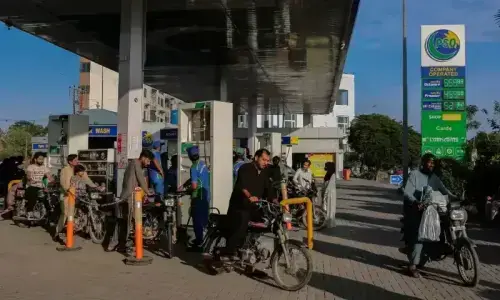
A significant fraction of climate financing is anticipated to be sourced from the private and institutional sectors through the international and national capital markets. The total carbon emissions of the Peshawar district till 2030 are expected to be around 11.76 million tons. Of these emissions, the energy sector contributes zero emissions, whereas the transport sector is on the top of all other sectors with 6.98m tons (59.3% of overall emissions) of GHG emissions in Peshawar. The agriculture and livestock sector ranks second, with 4.25m tons (36.1% of overall emissions), while the waste sector emits 0.53m tons (4.6% of overall emissions).
These actions include the reduction of GHG emissions in the transport sector by adopting public transport, improvements of roads, replacement of 30 per cent vehicles with electric vehicles (EVs), adopting climate-friendly agriculture practices along with urban forestation.
Published in Dawn, March 26th, 2023