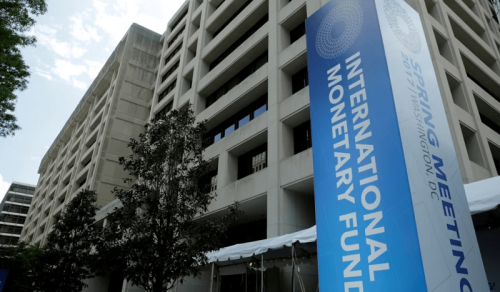
WASHINGTON: Pakistan will ultimately reach an agreement with the International Monetary Fund (IMF), but it is difficult to say exactly when, Washington insiders Dawn spoke to said on Thursday.
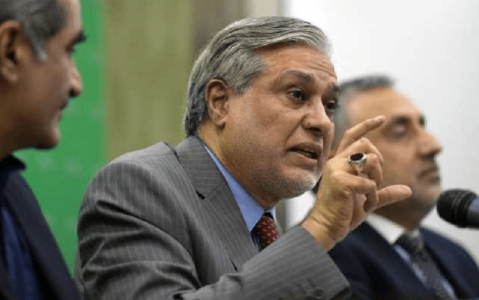
“In a week, two weeks, three weeks, difficult to say with any certainty,” said one highly-placed source when asked to comment on Finance Minister Ishaq Dar’s statement that the government was close to concluding a deal with the IMF and a staff-level agreement may be signed next week.
Officials at various financial institutions also blamed the government’s reluctance in concluding a deal with the Fund for its currency crisis.
“The problem started late last year when former finance minister Miftah Ismail was removed,” said one insider. “He understood the need for course correction and wanted to do so. Mr. Dar does not.”
Speaking on Hamid Mir’s show on Geo News on Thursday night, the former finance minister chalked up the spike in the dollar rate to SBP action, saying that the central bank had probably ‘let go’ of the dollar rate, resulting in the increase.
He also spoke about capital flight, saying that it had been triggered by a host of factors, not least of which was the fact that our foreign reserves are being shored up by loans from countries such as China, which is creating fears of a default.
Officials Dawn spoke to in Washington suggested that Mr Dar’s refusal to unhook the currency and withdraw general subsidies and his aversion to debt-restructuring hurt the economy.
“The rupee could have stabilised at 250-260 a dollar if Mr. Dar had unhooked it on time,” one of the officials said. “Now, it is at 285 and may go up to 300.”
Another argued that “artificially strengthening the rupee was like subsidising imports, something Pakistan cannot afford to do.” Restructuring the debt, he added, would have given Pakistan a respite for five to 10 years.
“Instead of continuing to deplete its foreign exchange reserves by paying loans, Pakistan could have used this period to enhance reserves,” the official said. “This could have stopped the slow bleeding that is threatening to collapse the economy.”
Yet another official said that “Pakistan needs to realise that the IMF reforms would benefit the country,” not the Fund.
“The economy needs restructuring, but they are afraid of swallowing this bitter pill,” he added.
Most of the insiders Dawn spoke to saw a link between the country’s political situation and economic instability. They had hoped that Wednesday’s Supreme Court decision would diffuse the situation, leading ultimately to elections and a stable government that the IMF and other financial institutions felt comfortable with.
“But this did not happen. Nothing seems to work. And this is hurting the national economy,” one of them said.
Published in Dawn, March 3rd, 2023