THE instability that has wreaked havoc on the legislature and executive for the greater part of the past year now threatens to consume the judiciary as well. One of the ugliest political feuds of our modern history has seen the Constitution twisted and manipulated by both government and opposition to suit their competing claims on power.
Now, within a year after passing two momentous judgements — one that overturned the PTI deputy speaker’s ruling on the vote of no-confidence, and another that seemingly ‘rewrote’ Article 63-A of the Constitution — the Supreme Court is once again the centre of attention over its suo motu proceedings on the question of whether elections for dissolved assemblies can be put off for more than 90 days.
However, many believe it is time for the Supreme Court to look farther beyond. The court is being asked to set matters straight by reviewing its past judgements that have paved the path to the current political crisis. These include the Panamagate ruling, the disqualification of lawmakers like PTI’s Jahangir Tareen on weak pretexts, and so on.
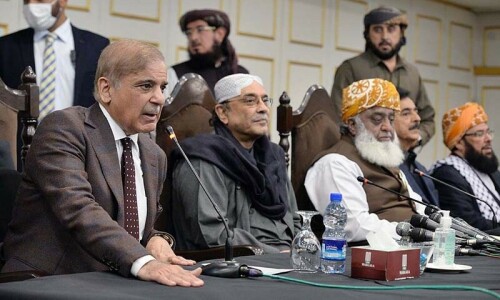
The demands come as patience on both sides of the political divide has run out. The PTI has threatened to trigger social upheaval if the question of elections is not resolved, while the PML-N is publicly attacking the integrity of sitting judges and accusing them of prejudice. Recently leaked audios allegedly involving one of the sitting Supreme Court justices are being used by various public figures to impeach the apex court’s integrity in the court of public opinion. It is in this context that the composition of the nine-member bench of the apex court-appointed to hear the suo motu case has been challenged by the PDM and the Pakistan Bar Council.
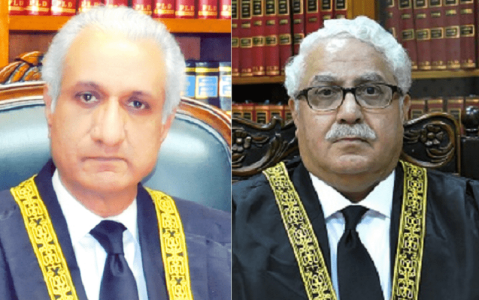
There is weight to the question of why certain senior judges — including the senior puisne judge — have been excluded from a bench which is deciding on a matter of such grave national import.
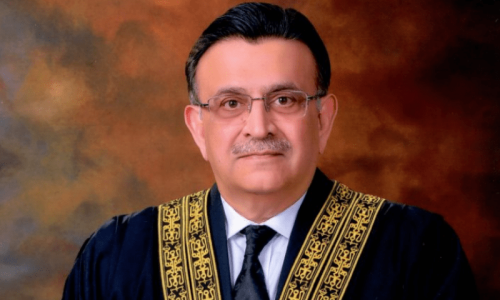
There is also the question of judicial propriety: should a judge allegedly involved in a political scandal be sitting on the bench? These are questions that the chief justice must address with great urgency. He must also contemplate why several key stakeholders are so unhappy with the judiciary, and what he may do within his powers to put to rest their concerns.
There is a very real danger that the judiciary may continue to be dragged deeper into controversy, given the stakes for the political parties. At the same time, this could be an opportunity for the judiciary to extricate itself from the many crises that have been plaguing the country. A judicial debate, involving the full court, over the major judgements passed in the past five years may open the doors for some reconciliation and closure.
Published in Dawn, February 26th, 2023