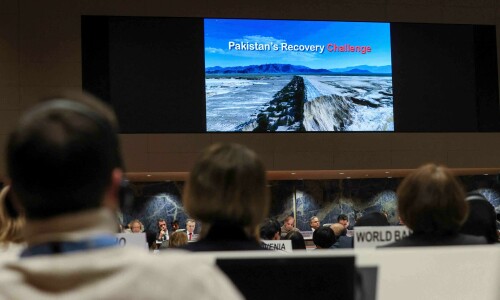
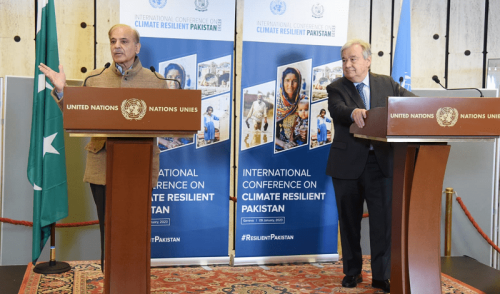
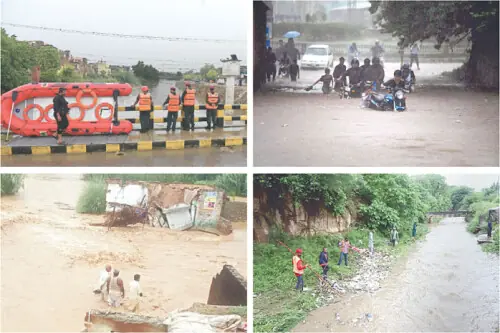
The commitments of nearly $10bn for flood recovery at the donors’ conference in Geneva on Monday must boost sentiments about the future of the country’s teetering economy.
The bulk of the money — $8.7bn — is promised by multilateral agencies, and will be available over the next three years. However, it remains unclear if the multilateral assistance will be in the form of loans or one-time aid/grants. UN Secretary-General Antonio Guterres, who co-chaired the moot, said announcements for in-kind support were also made by several delegations in addition to the multilateral and bilateral pledges.
Separately, Saudi Arabia has also hinted at its willingness to augment its deposits with the SBP from $3bn to $5bn, as well as boost its promised investments to $10bn to support cash-strapped Pakistan.
However, these developments or the pledges made at the conference will not solve Pakistan’s immediate dollar liquidity crisis as is being touted by some government officials.
With the SBP reserves already down to around $4.5bn or equivalent to less than four weeks of imports after recent loan payments to two UAE-based banks, the country direly needs an immediate cash injection. That — and probably the flood recovery pledges from multilateral lenders — is unlikely to materialise unless Islamabad mends its tense relationship with the IMF.
The premier has requested the IMF for ‘a pause’ in its tough demands for economic reforms — including implementation of a single, market-based exchange rate, increase in electricity and gas prices, and increase in taxes — before releasing more financial aid as the country tries to rebuild after catastrophic floods. Chances are that the Fund will not budge much from its present position.
Some Western delegates with significant clout over the IMF decisions also impressed upon Pakistan at the conference to implement macroeconomic reforms to swiftly conclude the ninth review of the IMF programme not only to create fiscal room for the government’s own contribution to flood recovery costs but also to ensure confidence among its international partners and investors. This clearly underlines that materialisation of most promised multilateral and bilateral funds will be dependent on the resumption of the IMF programme.
That the fundraising at the Geneva conference exceeded the expectations of $8bn sought by Prime Minister Shehbaz Sharif is encouraging. Nonetheless, the premier and his economic team must understand that this time around the new lifeline they are seeking in the shape of relaxed IMF conditions and a sustained international support plan will not be made available unless the country is seen taking concrete action on reforms for longer-term economic recovery.
Mr Sharif rightly told the conference that his ‘country is racing against time to deal with towering needs’. But this race cannot be won just by reiterating commitment to the reform agenda.
Published in Dawn, January 11th, 2023