Kenyan police charged with crimes against humanity


 3
3


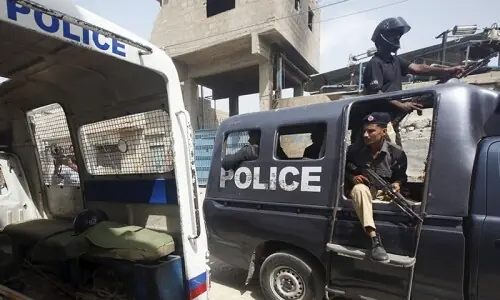
NAIROBI: In a landmark decision, Kenyan prosecutors said on Friday they would charge police officers with crimes against humanity over a deadly crackdown on post-election protests in 2017.
The charges cover rape, murder and torture and include the case of a six-month-old baby girl whose death became a symbol of police brutality during the bloody election aftermath.
“This is the first case of crimes against humanity charged under Kenyan domestic law using the International Crimes Act and also the first criminal prosecution of electoral-related sexual violence,” the director of public prosecutions (DPP) Noordin Haji said.
An official at the prosecutor’s office said 12 senior police officers were facing charges.
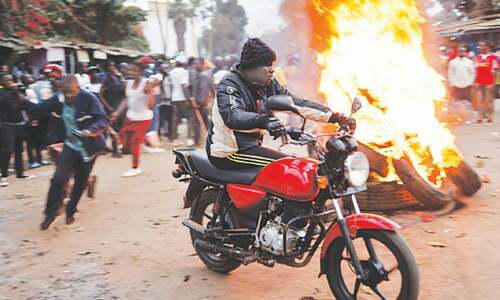
The police crackdown following the disputed presidential election in Aug 2017 saw around 100 people killed over a four-month period.
“The attacks were planned, coordinated and not random,” the DPP statement said, saying various offences such as torture, rape and sexual violence “were committed by or under the authority of senior national police officers”.
The baby, Samantha Pendo, died after being beaten by police during a raid on her house as protests flared in the western city of Kisumu.
Officers fired tear gas into their house and battered down the door before raining blows on the couple with batons while the mother held Samantha in her arms.
Extra-judicial killings are rife in Kenya, and justice is rare with few examples of police being held to account.
Enlightened leadership
Amnesty International’s secretary general on Friday called for new “enlightened” political leadership in Africa, lamenting shrinking civil liberties in Mali, Senegal and elsewhere on the continent.
Speaking to reporters in the Senegalese capital Dakar after visiting both countries, Agnes Callamard spoke of worrying reports of abuses in Mali and urged more transparency in probes into protester deaths in Senegal.
She said West African nations were experiencing a reduction in the scope of individual freedoms, with activists being prosecuted, security forces using excessive force against protesters, and journalists under pressure throughout the region.
“In this context, in which human values are being flouted, we need real leaders, we need authentic leadership, we need people who stand out from this,” Callamard said.
“I would hope that perhaps these leaders could emerge or be found in Africa,” she said, adding former South African president and anti-apartheid activist Nelson Mandela was such an example.
“The world needs enlightened leadership from African leaders. We find it at the level of civil society, now we should also find it at the level of political leadership”, she said.
In Mali, she denounced ill will on the part of the ruling junta.
“Amnesty International and others have noted an increase in violence against civilians since the beginning of the year, an increase that is not at all recognised by the authorities,” she added.
Yet “that denial cannot help”, she said.
She cited “extremely worrying” reports of enforced disappearances and urged investigations into crimes allegedly committed by armed forces against civilians.
But, she said, there had been “progress” on the legal and administrative framework towards fighting impunity.
In Senegal, she called for greater transparency in investigating the violent protests of March last year and June this year, in which civilians were killed.
In March last year, she said 14 people died in protests following the arrest of the opposition politician Ousmane Sonko on rape charges.
In June, protests in the run-up to parliamentary elections again turned violent. Authorities “claim a willingness to apologise... but for Amnesty the truth about the wrongs (committed) and justice for the families of the victims cannot be compromised,” Callamard said.
“Impunity for the excessive use of force by the security forces must end.”
Published in Dawn, October 29th, 2022