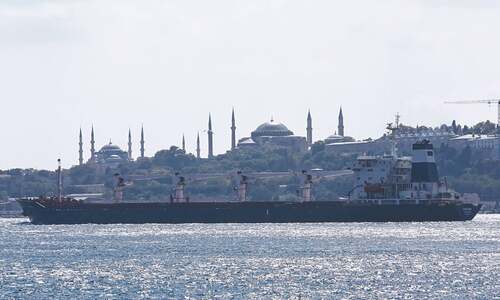
ISLAMABAD: A new United Nations report says the ‘Black Sea Grain Initiative’ signed in July to resume exports of Ukrainian grains via the Black Sea amid the ongoing war has offered hope and shown the power of trade in times of crisis.
As of October 19, the total tonnage of grain and other foodstuffs exported through the initiative had reached almost 8 million metric tons, report says.
The report published by the UN Conference on Trade and Development (UNCTAD) on Thursday, says the UN-led initiative has helped to stabilise and subsequently lower global food prices and move precious grain from one of the world’s breadbaskets of those in need.
Under the UN-led initiative, three seaports have been reopened – Odesa, Chornomorsk, Pivdennyi/Yuzhny. As a result, the number of port calls has increased and more importantly, the volumes carried have risen significantly
The Food Price Index published by the UN Food and Agriculture Organisation has shown that the prices of global food staples have declined in recent months – by about 8.6 per cent in July, 1.9 per cent in August and 1.1 per cent in September.
As the war erupted in Ukraine, the world watched as valuable grain corridors were closed off. Weekly ship departures from Ukrainian ports plummeted. There was a marginal recovery in subsequent weeks but port departures remained considerably below their 2021 levels. After the signing of the UN-led initiative, there was a gradual rise in ship departures.
The initiative reopened the grain gates of Ukraine to the world, and particularly to developing countries. Maize and wheat account for more than 70 per cent of the nearly 8 million tons of grain that have left Ukrainian ports under the initiative. Nearly 20 per cent of the wheat exports have gone to least developed countries (LDCs) with vulnerable populations.
The initiative doubled the amount of wheat shipped to LDCs between August and September – about half a million tons. But wheat exports to LDCs between January and September 2022 totaled less than 1 million tons. This implies an export gap of 1.2 million tons with respect to 2021. More needs to be done to match previous levels of exports.
The report says the initiative has helped to make grain more available and eased pressure on food prices. This has in turn helped to improve global access to food, particularly for the poorest and most vulnerable.
The prospect of the initiative and the reopening of the Black Sea ports helped to push down historically high market prices. But prices are rising again amid mounting concerns about whether the initiative will be renewed, and the threat of further disruptions to trade in the Black Sea and the closure of grain corridors. The report warned that wheat and maize prices are still at historically high levels. This weighs on the affordability of basic foods and poses a risk to food security globally.
The report was produced with contributions from the Joint Coordination Centre for the Black Sea Grain Initiative, comprised of senior representatives from Ukraine, the Russian Federation, Turkiye and the UN, which ensures the safe maritime transportation of grain and other foodstuffs from the three key Ukrainian ports in the Black Sea to the rest of the world.
Published in Dawn, October 21st, 2022