0
0

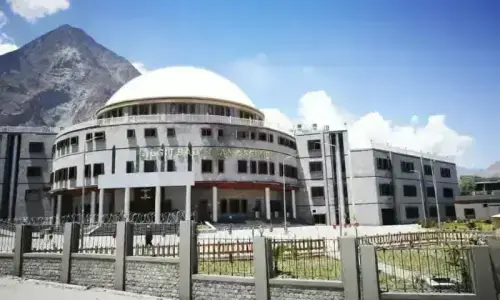
MUZAFFARABAD: University of Azad Jammu and Kashmir (UAJK) vice chancellor Prof Dr Mohammad Kaleem Abbasi has underscored the need of preserving the centuries-old history, civilisation and culture of the region and its transfer to the next generations.
He was addressing the opening ceremony of capacity building training programme in language documentation for faculty of public sector universities of Azad Jammu and Kashmir (AJK) and Gilgit Baltistan (GB) here on Monday.
The project is aimed at training faculty members of universities for collection, processing and archiving data of endangered languages is funded by the US government and administered by US Education Foundation in Pakistan (USEFP).
“The UAJK will launch diploma courses for the preservation and promotion of Kashmiri language and culture and will take all possible steps to save other regional languages from extinction,” Mr Abbasi vowed.
He maintained that language was not the name of just a dialect but it carried the whole culture, way of life, economy, and civilisation in its background.
“When a language perishes, it erases with it all the treasures of culture, civilisation, and historical events associated with it,” he observed.
VC Abbasi congratulated the English Department for initiating this important training programme to enhance the capacity of the faculty to document the regional languages for the academics of public sector universities in AJK and Gilgit-Baltistan GB.
He particularly thanked the management of the US-Pakistan University Partnership Grant Programme for their cooperation in realizing the potential threats to the existence of local languages being spoken in different parts of both territories.
In her opening address, UAJK Registrar Prof Dr Ayesha Sohail thanked all the individuals and institutions, especially the USEFP, for their keen interest and support in documenting the endangered languages of the region.
She said since its inception in 2009 that the Institute of Languages of UAJK had been focusing on linguistic diversity and cultural preservation apart from promoting joint efforts among local experts and linguists.
Dr Sohail recalled that the institute had organised several conferences in the past, which were participated by a large number of linguists from Pakistan, abroad, and both parts of the divided state.
Project Director Prof Dr Abdul Qadir told the participants that the extinction of regional languages was not restricted to Kashmir, Pakistan, or India but it was a global issue.
The programme would particularly address the threats posed to the local, and regional languages and formulate recommendations for practical measures that would be useful for language teachers, students, and researchers.
Dr Qadir expressed his deep gratitude to the national and international delegates for their participation and especially appreciated the support of the USEFP in this regard.
Former VC of Central University of [India occupied] Jammu Prof Dr Ashok Aima, Representative of USEFP Shahram Niazi, Dr Chris Donlay of San Jose State University USA, Prof Dr Henrik of Stockholm University Sweden also addressed the opening session of the workshop through video link.
Published in Dawn, July 5th, 2022