PTI asks UN, rights body to take notice of ‘excesses’ against workers


ISLAMABAD: The Pakistan Tehreek-i-Insaf (PTI) has asked the United Nations and UN High Commissioner for Human Rights to take notice of the physical violence launched by federal and provincial governments against PTI workers and leaders and their arrests during the party’s Haqiqi Azadi March on May 25.
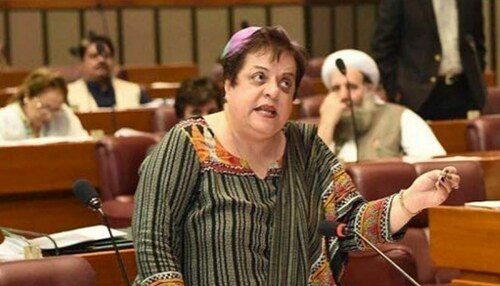
In separate letters written to the two international organisations, senior PTI leader and former minister for human rights Shireen Mazari provided “proof of physical violence” and efforts by the government to curtail freedom of expression, basic human rights and right to peaceful assembly.
The letters said that political chaos in the country was triggered by a “conspiracy” of regime change to topple the government of former prime minister Imran Khan to replace it with a combined opposition’s government, led by a politician who was facing multiple money-laundering cases and at present out on bail.
“Things then descended into utter chaos, but eventually the vote of no-confidence was held and the Khan-led government was voted out,” the letters said.
“Since then there has been a groundswell of public anger as reflected in huge rallies organised by Mr Khan’s party across the country, turning these protest rallies into a movement for the restoration of democracy and sovereignty of Pakistan, but the government, backed by the establishment, has responded with repressive measures,” the letters said.
“After a series of massive public meetings across Pakistan, PTI chairman Imran Khan gave a call for an Azadi (freedom) March in which people from across the country were to move to the capital Islamabad,” she said in the letters.
“The federal government, along with the two provincial governments of Punjab and Sindh, supported by Rangers, began a crackdown against workers and leaders of PTI in Islamabad and in the two provinces,” she said.
Drawing attention of the United Nations Special Procedures Mechanisms to human rights violations allegedly committed by the federal and provincial governments, along with law-enforcement agencies, Ms Mazari demanded an independent and impartial investigation into these “state excesses and human rights violations”. She also demanded of the two world bodies to ask the government to immediately cease harassment of PTI workers and leaders, release all political workers and withdraw all politically-motivated cases lodged against workers and leaders of PTI.
Ms Mazari also demanded an end to media censorship which, she said, was in violation of basic democratic norms and of the International Covenant on Civil and Political Rights (ICCPR) to which Pakistan was a signatory. She has also requested the UN agencies to play their role to stop the government from denying the PTI the right to peaceful protest through repressive measures and by blocking people’s access to protest sites.
Published in Dawn, June 2nd, 2022