Overuse and climate change kill off Iraq’s Sawa Lake


 0
0
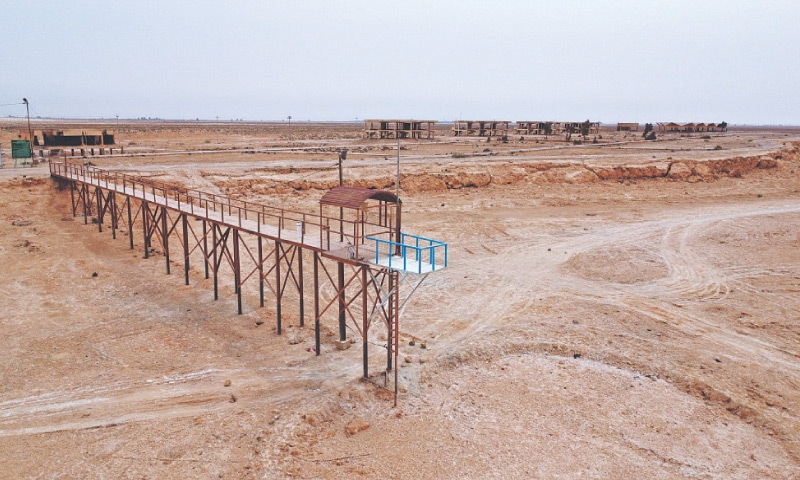

SAWA LAKE: A “No Fishing” sign on the edge of Iraq’s western desert is one of the few clues that this was once Sawa Lake, a biodiverse wetland and recreational landmark.
Human activity and climate change have combined to turn the site into a barren wasteland with piles of salt.
Abandoned hotels and tourist facilities here hark back to the 1990s when the salt lake, circled by sandy banks, was in its heyday and popular with newly-weds and families who came to swim and picnic. But today, the lake near the city of Samawa, south of the capital Baghdad, is completely dry.
Bottles litter its former banks and plastic bags dangle from sun-scorched shrubs, while two pontoons have been reduced to rust.
“This year, for the first time, the lake has disappeared,” environmental activist Husam Subhi said. “In previous years, the water area had decreased during the dry seasons.” Today, on the sandy ground sprinkled with salt, only a pond remains where tiny fish swim, in a source that connects the lake to an underground water table.
Published in Dawn, April 27th, 2022