COLOMBO: Sri Lanka’s unprecedented shortages of food, fuel and vital medicines will worsen before an international bailout is negotiated, its finance minister warned on Friday as inflation hit another record high.
Ali Sabry, who is in Washington for talks with international lenders, said an IMF bailout may take months, but he was seeking about $2.5 billion in emergency assistance from others.
“It is going to get worse before it gets better,” Sabry told reporters in an online press conference. “It is going to be a painful few years ahead.” However, he added that he was optimistic Sri Lanka could “come out of this strong and we may not even have to go for an IMF program ever again.” His remarks came as official data showed Sri Lanka’s inflation hit a record high for the sixth consecutive month as the country was gripped by shortages never experienced before.
The statistics office said the broad-based National Consumer Price Index (NCPI) rose 21.5 per cent year-on-year in March, more than four times the 5.1pc inflation of a year earlier. Food inflation in March stood at a whopping 29.5pc, the highest ever.
The figures are likely to rise further: the state-run oil company has subsequently raised the price of diesel, commonly used in public transport, by 64.2pc.
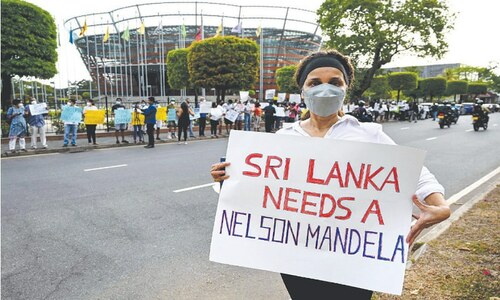
The worsening economic woes has led to clashes at nationwide demonstrations calling on President Gotabaya Rajapaksa to step down over mismanagement and corruption.
Sri Lanka tapped the International Monetary Fund this week for emergency assistance, but was told that its external debt was “unsustainable” and must be “restructured” before any help.
“Approval of an IMF-supported program for Sri Lanka would require adequate assurances that debt sustainability will be restored,” the IMF said.
The government last week announced a default on its external debt and said precious foreign exchange will be reserved to finance essential food and medicines.
Sabry said he admitted to the IMF that Sri Lanka’s recent economic blunders in slashing taxes worsened the crisis and that Colombo should have sought its help much earlier.
Published in Dawn, April 23rd, 2022