RIYADH: The Saudi-led coalition launched air strikes on Sunday on Yemen hours after Houthi rebels announced a three-day truce, with the UN chief condemning a surge in violence as the war enters its eighth year.
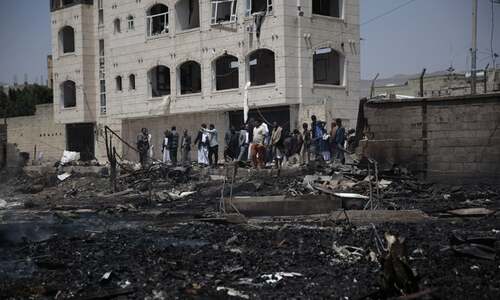
The raids targeted Sanaa, the rebel-held capital, according to Saudi Arabia’s Al Ekhbariya TV, which tweeted “the start of air strikes on Houthi camps and strongholds in Sanaa” at around midnight.
The attacks came shortly after the Iran-backed Houthis announced a three-day truce and offered peace talks on condition that the Saudis stop their air strikes and blockade of Yemen and remove “foreign forces”.
On Friday, the rebels fired drones and missiles at 16 targets in Saudi Arabia, turning an oil plant near Jeddah’s Formula One track into a raging inferno as aghast drivers looked on.
The office of the UN’s special envoy for Yemen, Hans Grundberg, tweeted on Sunday that he is “engaging with all sides and continues his efforts towards a truce during Ramadan”, the Muslim holy month which begins in April.
UN chief condemns surge in violence as the war enters its eighth year
“He reiterates his call for de-escalation and welcomes all steps by the parties in that direction,” it added.
The coalition has not yet responded to the Houthis’ truce announcement.
The flurry of attacks and diplomacy came as Yemen, the Arab world’s poorest country, on Saturday marked seven years since the Saudi-led military intervention against the Houthis, who seized Sanaa in 2014.
The conflict has killed hundreds of thousands of people directly or indirectly and displaced millions, creating what the United Nations calls the world’s worst humanitarian crisis.
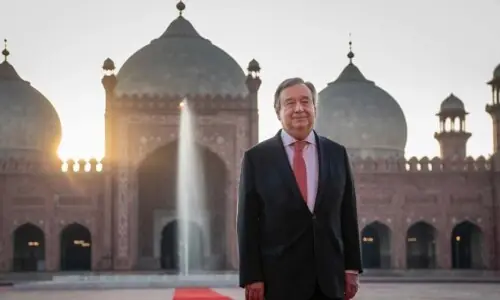
UN Secretary-General Antonio Guterres on Saturday condemned the sudden rise in hostilities. He said eight civilians, including five children and two women, were reportedly killed in retaliatory strikes on Sanaa following Friday’s rebel attacks.
The UN staff compound in the city was also damaged, his spokesman Stephane Dujarric said in a statement.
Yemen ‘forgotten’
“The Secretary-General strongly condemns the recent escalation of the conflict in Yemen,” the statement said, adding that Guterres is “deeply concerned” about reports of coalition attacks on the lifeline port of Hodeida. He urged the warring parties to “immediately de-escalate” and reach a “negotiated settlement” with Grundberg’s help.
Thousands of people demonstrated in Sanaa on Saturday, holding placards and chanting, to denounce the Saudi-led intervention which included nine countries when it was launched on March 26, 2015.
Today, it is largely just Saudi Arabia and, to a lesser extent, the United Arab Emirates, which says it has withdrawn troops from Yemen but remains an active player, training militias on the ground.
The coalition’s intervention has reversed the Houthis’ advances in the south and east of the country but has been unable to push them out of the north, including Sanaa.
Published in Dawn, March 28th, 2022