Transgender outcasts turn artists in India
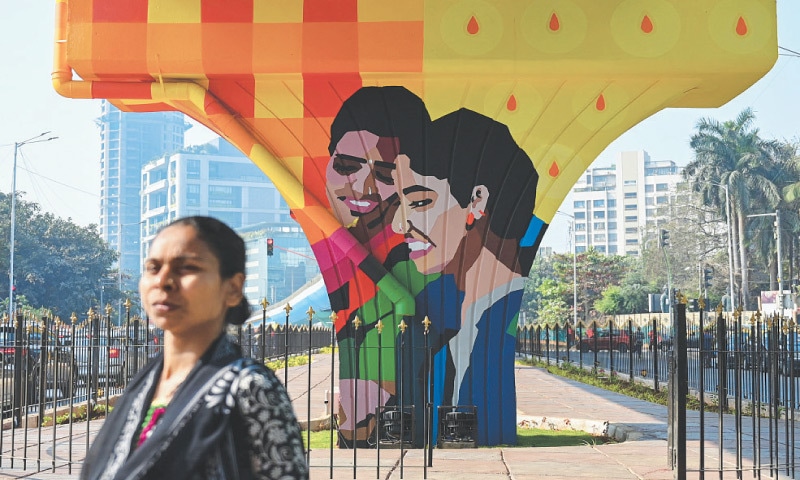
MUMBAI: On a giant flyover in the sprawling Indian metropolis of Mumbai, a transgender art collective is trying to change attitudes as radically as it transforms the concrete pillars into brightly coloured murals.
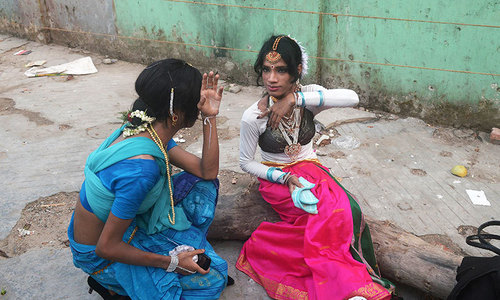
Known as “hijras”, individuals identified as male at birth but now part of India’s “third gender”, have an ambivalent position on the edges of Indian society, respected and feared in turn as some Hindus believe they hold the power to bless or curse.
Denied jobs at most workplaces, many are forced to beg at traffic intersections, where they are a common sight in major cities, or on trains. Some turn up at family events such as weddings or birth celebrations, or at new houses, to offer blessings in return for money, sometimes threatening to issue curses if denied. Others turn to prostitution, increasing their risk of violence.
The Aravani Art Project hopes to challenge the stigma and marginalisation by showing transgender people as artists in the same public spaces where they beg or face abuse.
At the latest mural site — one of Mumbai’s busiest junctions — the team painted portraits of local residents, among them two cleaners, a vegetable seller and a policeman.
“It’s an opportunity for us to show what talent we have,” said transgender woman artist Deepa Kachare.
“We have to beg from people by going to marriage functions, babies’ births, shops, trains, and some of us are sex workers to make money as well,” she said.
“We go everywhere to beg but we love to work hard and earn money.” The organisation — whose projects are commissioned by governments, businesses and NGOs — has brought together dozens of mostly transgender women for street art projects in multiple Indian cities.
“People are very happy to see us working as artists,” said Kachare, 26. “Now they think positively when they see us.”
The art collective takes its name from Lord Aravan, a Hindu deity who is “wedded” to hundreds of transgender people every year in a southern Indian festival.
Hinduism has many references to “third genders”, such as Shikhandi, a character in the epic Mahabharata, and hijras have assumed different roles in society over the centuries, among them royal servants and harem guardians, according to historians.
Published in Dawn, March 21st, 2022