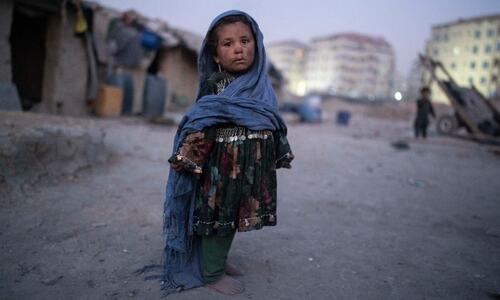
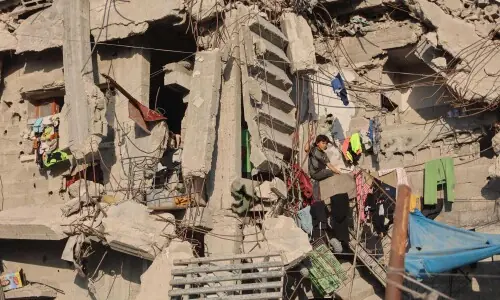
UNITED NATIONS: A staggering 95 percent of the Afghan population is not eating enough food, with that percentage rising to almost 100 per cent for female-headed households, warns a UN report.
The report — released in New York on Tuesday evening — showed that the number of people facing acute hunger in Afghanistan had increased from 14 million in July 2021 to 23 million in March 2022.
“It is a figure so high that it is almost inconceivable. Yet, devastatingly, it is the harsh reality,” said Ramiz Alakbarov, the UN Secretary General’s deputy special representative for Afghanistan.
The rapid increase in those experiencing acute hunger has forced households to resort to desperate measures such as skipping meals or taking on unprecedented debt to ensure there is some food on the table at the end of the day.
“These unacceptable trade-offs have caused untold suffering, reducing the quality, quantity, and diversity of food available,” the report warned. This has led to “high levels of wasting in children and harmful impacts on the physical and mental wellbeing of women, children and men.”
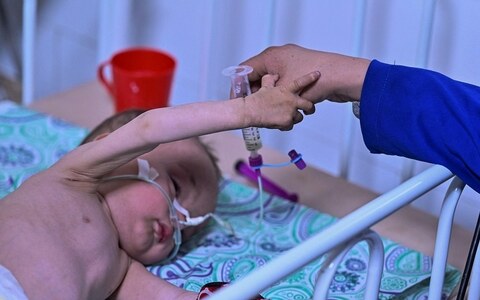
In his report, Mr Alakbarov painted a picture of hospital wards filled with malnourished children, many weighing at age one what an infant of six months would weigh in a developed country, with some “so weak they are unable to move”.
According to the UN report, Afghanistan is facing multiple crises, such as another bad harvest this year, a banking and financial crisis so severe that it has left more than 80 per cent of the population facing debt, and an increase in food and fuel prices.
Acute malnutrition rates in 28 out of 34 provinces are high with more than 3.5 million children in need of nutrition treatment support.
Dr Alakbarov explained that since mid-August, over 2,500 nutrition treatment sites across all 34 provinces, both urban and rural, have been serving 800,000 acutely malnourished children, “and we plan to reach 3.2 million affected children this year”.
Published in Dawn, March 17th, 2022