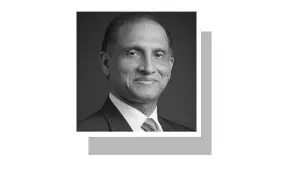
Faisal Vawda petitions SC to urgently hear disqualification case


 4
4


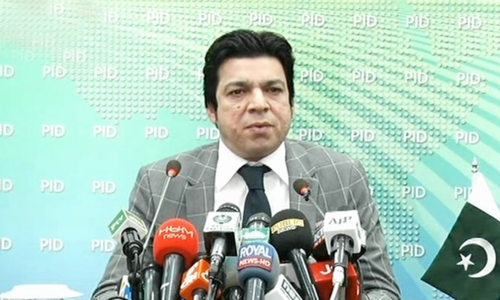
ISLAMABAD: Pakistan Tehreek-i-Insaf leader Faisal Vawda on Saturday filed a fresh application before the Supreme Court seeking urgent hearing of the petition against his lifetime disqualification from parliament for concealing his American nationality.
Mr Vawda had approached the apex court only a day ago with the plea to set aside the February 9 decision of the Election Commission of Pakistan (ECP) that barred him from parliamentary politics forever.
In the fresh application, the former senator requested the Supreme Court to fix his ineligibility matter preferably during the week commencing from Feb 21.
Moved through senior counsel Waseem Sajjad, the petition apprised the court that the ECP had given no grounds or reasons for invoking Article 62(1)(f) of the Constitution to disqualify him for life. The petition argued that the ECP appeared to be under the impression that any person disqualified under Article 63(1)(c) of the Constitution (for having dual nationality) would automatically be penalised under Article 62(1)(f), but this was not right.
Fresh plea argues both mens rea, evidence missing in ECP decision
To incur a penalty under Article 62(1)(f), there must be mens rea (criminal intent) as well as evidence before a court of law, the petition argued, adding that both were missing in the pronouncement of the ECP decision.
Earlier on Feb 16, the Islamabad High Court (IHC), while rejecting Mr Vawda’s challenge to the ECP decision, held that the commission was bound to give effect to the Supreme Court’s declarations (in the Habib Akram case) and that was what it had done.
Mr Vawda pleaded that the Supreme Court had already held in the 2021 Allah Dino Bhayo case that the ECP was not a court of law within the context of Article 62(1)(f). The ECP also ignored Article 225 of the Constitution under which no election to a house (of parliament) or the provincial assembly could be called in question except by an election petition presented to a tribunal, he argued.
According to the petition, the electoral exercise ends with the issuance of a notification, through which a candidate is declared elected. After this, only a tribunal could question the election and an appeal can be filed before the apex court. If the ECP’s contention in this matter was accepted, then Article 225 would become redundant, the petitioner said.
Since Section 9 of the Elections Act gives limited power to the ECP to exercise the powers of the tribunal for a period of 60 days, if the commission’s stance in the Vawda case is accepted, Section 9 become redundant considering ECP’s powers under Article 218 and Section 8(c).
About the affidavit, Mr Vawda in his petition urged the court to see the language of the affidavit and its meaning in totality with particular reference to the opening words: “I hereby solemnly affirm and declare that to the best of my knowledge and belief…”. “These opening words show that if a person honestly believes a certain thing particularly on a legal issue then he cannot be straightaway declared to be a guilty person if his belief runs contrary to a legal provision,” the petition contended.
“Since the language of the affidavit is subjective and has penal consequences, it must be construed strictly,” it argued, explaining that the ECP should have taken into account the fact that the petitioner was not a lawyer and believed a certain state of things based on the information available to him at the time of filing of his nomination papers for July 2018 general elections.
Published in Dawn, February 20th, 2022